Operational Capability
Tiger Supplies is structured to support high-volume, high-expectation customers through a scalable operating model, a centralised national distribution hub, integrated technology, and rigorous quality control. Our infrastructure, systems and people are designed to increase throughput quickly without compromising accuracy, service levels, compliance or sustainability.
Scalable Infrastructure
Tiger Supplies has made sustained investment in its operational infrastructure to support long-term growth and increasing customer demand. Our operation is centred around a national distribution hub designed to support efficient nationwide coverage while maintaining tight control over stock, quality and service.
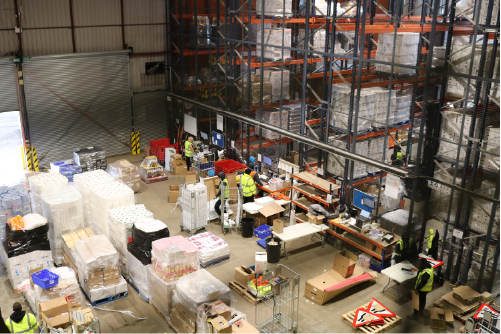
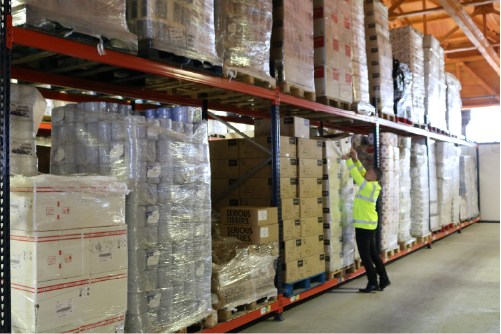
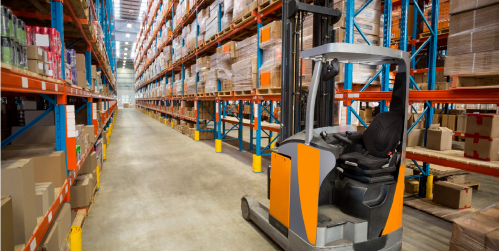
The business operates from a modern, fully racked warehouse facility with significant headroom for expansion. This includes 94,000 sq ft of internal racked storage, with immediate access to a further 50,000 sq ft of adjacent racked space available at short notice. In addition, substantial secure external storage is available, providing flexibility for peak demand, project-based requirements or temporary volume uplifts.
The operational model is designed to scale from a standard single-shift pattern through to extended hours and ultimately a 24-hour, 7-day operation when required. This scalability is supported by structured onboarding processes, system-driven workflows and established agency labour relationships, enabling rapid capacity expansion without disruption.
Capacity Planning & Throughput
Operational workload is measured and planned using order lines, rather than orders, to provide an accurate representation of throughput in a mixed-basket environment. This allows precise planning where a single order may contain one line or several hundred lines.
Under a standard operating model, Tiger Supplies processes an average of 7,500 outbound order lines per week. The existing infrastructure, staffing model and systems enable this to scale to approximately 32,000 outbound order lines per week under a 24/7 operating model through additional shifts and extended hours.
Inbound operations are managed with the same discipline. Under normal operating hours, the business processes an average of 816 inbound lines per week, with the ability to scale to approximately 3,400 inbound lines per week under a 24/7 model. This approach ensures resilience against seasonal demand, sudden volume spikes and onboarding of new requirements without compromising service performance.
Inbound Controls & Compliance
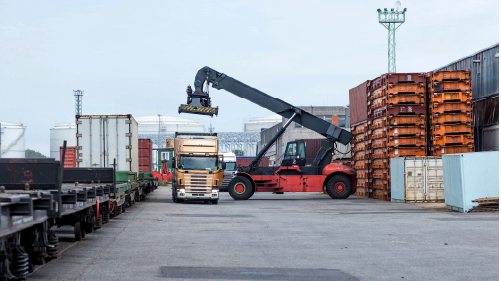
Tiger Supplies is equipped to receive inbound goods across a wide range of freight types, from small parcel deliveries through to full articulated vehicles and high-cube shipping containers.
All inbound deliveries are handled by a dedicated Goods In team responsible for unloading, counting and verifying goods against purchase orders. Products are subject to quality control checks before being released into stock, including verification of relevant certification such as UKCA/CE marking and FSC or PEFC evidence where applicable.
Any non-conforming items are immediately quarantined and logged within the ERP and warehouse management system until resolved. This ensures full traceability, protects downstream processes, and prevents non-compliant products from entering circulation.
Stockholding & Replenishment
Tiger Supplies maintains real-time stock visibility through fully integrated ERP and warehouse management systems, enabling rapid response to changes in demand.
The business typically holds approximately £3 million of stock and consistently delivers in excess of 99 percent of customer orders complete on first delivery. Automated forecasting and consumption analysis enable purchase orders to be generated directly to approved suppliers, supporting proactive replenishment and minimising the risk of stockouts.
This stockholding strategy provides a buffer against supply chain disruption while supporting consistent service levels across high-volume environments.
In-House Production Capability
In addition to distribution, Tiger Supplies operates in-house production capabilities covering garment branding, product assembly and light manufacture. This provides greater control over lead times, quality and responsiveness, while reducing reliance on fragmented third-party processes.
In-house production capacity is designed to scale alongside demand. Current capability includes heat seal logo application of approximately 4,000 units per week under standard hours, scalable to 16,800 units per week under a 24/7 model. Embroidery capacity operates at approximately 1.12 million stitches per week under standard hours, scalable to 4.7 million stitches per week under extended operations.
This capability enables faster turnaround, greater consistency and improved control for customers with branded or customised requirements.

Quality Control
Quality control is embedded at every stage of the operation and is designed to scale alongside volume.
Outbound accuracy is protected through scan verification, despatch cross-checks, weight and dimension controls, and packaging integrity checks, supported by dedicated Goods Out quality checkers. This approach consistently delivers picking accuracy in excess of 99.8 percent.
Structured quality sampling regimes are applied based on product type:
• In-house manufactured products: minimum 10 percent QC sampling
• Imported products: minimum 15 percent QC sampling
• UK-sourced products: minimum 5 percent QC sampling
Production defect rates are maintained below 0.5 percent, supporting consistent quality even as volumes increase.

Distribution & Logistics
Tiger Supplies operates a hybrid distribution model designed to balance speed, resilience, efficiency and sustainability.
Local deliveries are managed using the company’s own vehicle fleet, providing control over scheduling, responsiveness and consolidation of multi-drop routes. Routing is optimised using transport management software to minimise mileage and emissions, supported by ongoing fleet modernisation including hybrid and electric vehicles.
Regional and national deliveries are managed through a carefully selected network of courier and pallet partners. This enables consolidated transport, reduces emissions per consignment and improves resilience by avoiding reliance on a single carrier. Partner fleets operate to modern emissions standards and are investing in lower-carbon fuels and vehicle electrification.
The warehouse and distribution operation remains accessible 24/7, with emergency delivery capability available when standard routes do not meet specific operational requirements.

Cost Control & Continuous Improvement
Tiger Supplies continuously drives value through a combination of operational efficiency, direct manufacturer relationships, technology integration and sustainability-led savings.
Cost and performance data can be analysed and reported at granular levels including product, period, cost centre, order number or project level. Reporting is provided at agreed intervals or on an ad hoc basis when immediate opportunities for improvement are identified.
Key cost control measures include:
• Lean warehouse processes such as cluster picking and scan verification
• Transport consolidation and route optimisation
• Dual sourcing and supplier review to maintain pricing and security of supply
• ERP-driven forecasting and automation to reduce overhead and stock risk
• Packaging reduction and energy efficiency initiatives
Cost volatility is actively managed through alternative sourcing options, maintained stock buffers and close supplier engagement, ensuring continuity without compromising service.

Customer Support & Aftersales
Customer support is delivered through a structured account management and aftersales model. Dedicated account managers provide day-to-day support and can attend sites nationally where product training or application guidance is required, including the involvement of technical supply chain representatives where appropriate.
Aftersales activity is managed through defined processes covering proof of delivery, missing or incorrect items and issue resolution within agreed KPIs. All activity is logged within ERP and CRM systems to support transparency, reporting and continuous improvement.
In-house marketing and production teams enable rapid creation of product guides, training materials and digital content to support customer rollout and adoption.

Management Information & Reporting
Tiger Supplies produces a comprehensive suite of real-time management information through its ERP platform. Reporting can be tailored to customer requirements and delivered hourly, daily, weekly or monthly.
Reporting capabilities include:
• On-time and in-full performance
• Delivery transit times and exceptions
• Quality performance and returns
• Customer service response and resolution metrics
• Usage, spend and trend analysis
• Open orders, backorders and stock availability
• Supplier performance monitoring
Live operational dashboards are used internally to support proactive, real-time decision-making aligned to service performance objectives.

Order Traceability & Control
Orders are managed end-to-end through integrated systems, providing full visibility from order placement through to delivery. Stock availability is confirmed at order placement, backorders are managed automatically where required, and despatch and tracking data is recorded for customer support access.
Proof of delivery documentation can be retrieved when required, ensuring transparency, traceability and confidence throughout the fulfilment process.