EN 166 Safety Glasses: Understanding the Standard & What's Changing
Posted by Tiger Supplies on 14th Sep 2026
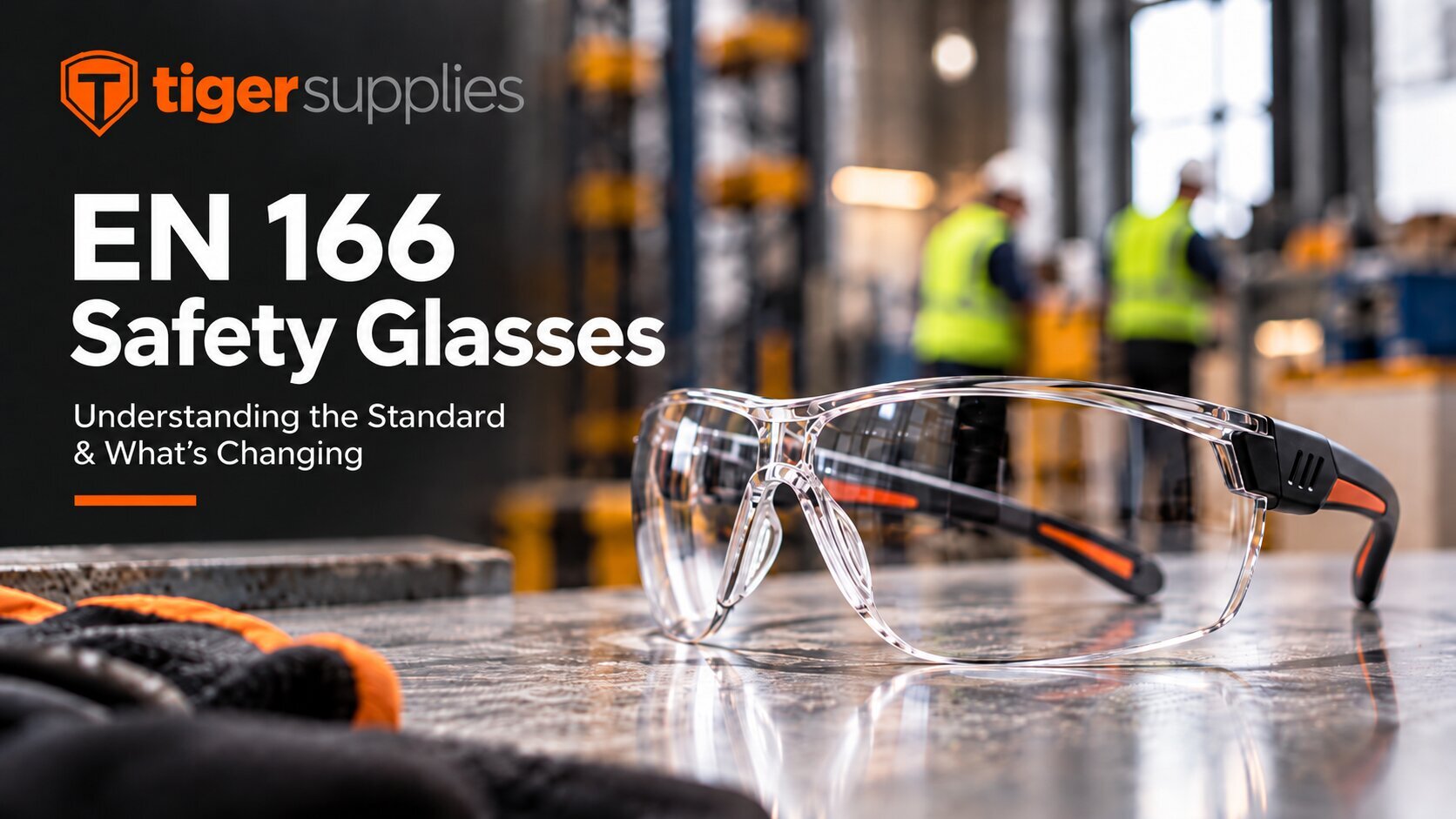
EN 166 has been the backbone of occupational eye protection standards in the UK and EU for over two decades. Whether you're managing workplace safety, selecting personal protective equipment (PPE), or simply trying to understand what those cryptic markings mean on your safety glasses, this comprehensive guide will walk you through everything you need to know about EN 166, and what's changing in the industry right now.
What is EN 166?
EN 166 is the European standard defining requirements for occupational eye protection in the workplace. Adopted across the UK and EU, it ensures that safety glasses, safety goggles, and related products are rigorously tested for impact resistance, optical quality, and durability. For employers, EN 166 compliance is a legal requirement under workplace health and safety regulations.
However, EN 166 is now being superseded. In November 2025, the UK and EU officially adopted EN ISO 16321 as the replacement standard for occupational eye protection. While EN 166 eyewear remains valid and compliant for now, organisations are gradually transitioning to the newer standard, which offers significant improvements in fit, protection levels, and marking clarity.
Decoding EN 166 Markings: What Do Those Codes Actually Mean?
One of the most confusing aspects of EN 166 is the marking system. Understanding these EN 166 marking codes is essential for selecting the right eye protection for your specific workplace hazards.
The EN 166 marking system uses numbers and letters to communicate the eyewear's protective capabilities:
Impact Rating:
1: Basic impact resistance (low energy)
3: Standard impact resistance (medium energy) - most common
F: High-speed impact resistance (higher-risk environments)
B: High-mass impact resistance
Additional Protective Features:
K: Scratched lens resistance
N: Anti-fog coating
F: Flammable particle resistance
A: UV protection
B: Molten metal splash protection
For example, "3NF" means standard impact resistance (3), anti-fog coating (N), and flammable particle resistance (F). By decoding these EN 166 marks, you can quickly verify your eyewear meets your workplace hazards.
The key to compliance markings is matching eyewear to actual hazards. A pair rated "3" might be adequate for manufacturing with flying debris, but insufficient for chemical handling where additional chemical resistance is needed.
Types of EN 166 Eye Protection: Choosing the Right Solution
Different workplace hazards require different eyewear types. Understanding the three main categories: safety glasses, safety goggles, and face shields helps you select appropriate protection.
Safety Glasses
Safety glasses are the most commonly used eye protection in workplaces. They feature reinforced frames and impact-resistant lenses, ideal for moderate hazards in manufacturing, workshops, construction, and general factory work. They offer good peripheral vision and comfort for all-day wear, making them cost-effective for baseline eye protection programs. Our Riley Fresna Safety Glasses combine compliance with comfort for extended workplace use. Explore safety glasses options for your team.
Safety Goggles
Safety goggles provide comprehensive coverage with a full seal around the eyes, essential in high-hazard environments with splashes, chemical exposure, or intense particulates. They're used in chemical handling, grinding, high-speed operations, and splash hazard environments. The sealed design prevents particles and liquids from entering around lenses. Our Uvex Ultrasonic Safety Goggle with Clear Lens balances protection with visibility and comfort. Browse safety goggles options.
Face Shields
Face shields provide broad facial protection and are often used with safety glasses or goggles for maximum coverage. They're valuable for high-speed impacts, chemical splashes affecting the face, grinding operations, and arc flash hazards. Explore our complete safety eyewear range to find the right fit.
EN 166 vs EN ISO 16321: What's Changing and Why It Matters
This is where things get interesting, and potentially confusing, for many workplace safety managers. EN 166 has served the industry well for over 20 years, but EN ISO 16321 represents a significant evolution in eye protection standards. Understanding the key differences between ISO 16321 and EN 166 is critical as organisations plan their transition.
Fit and Coverage: From One Size to Six Headforms
One of the most profound changes from EN 166 to EN ISO 16321 is the approach to fit. EN 166 used a single headform for testing, which meant many workers, particularly those with smaller or larger head size, struggled to find eyewear that actually fitted properly.
EN ISO 16321 introduces six different headforms that represent the full spectrum of adult head sizes, covering approximately 95% of the global population. This means eyewear tested under the new standard will accommodate a much wider range of face shapes and sizes, significantly improving both comfort and protective effectiveness. For employers, this translates to better compliance rates, workers are more likely to wear eyewear that actually fits.
Impact Protection Based on Actual Risk Levels
EN 166 uses a relatively simple categorisation of impact resistance (ratings 1, 3, F, B). While functional, this approach doesn't always match the real-world hazards in specific workplaces.
EN ISO 16321 adopts a risk-based approach to impact protection:
- Basic protection: Suitable for low-energy impacts and general workplace use
- High-energy impact: For environments with higher-speed projectiles
- Orbital impact protection: Shields the area around the eye socket
- Extended orbital protection: Offers even wider facial coverage
- Full face protection: Maximum coverage for extreme hazard environments
This granular approach means safety professionals can select eyewear that precisely matches their workplace hazards, no more, no less.
Updated Markings and Labelling
The EN 166 marking system, while functional, can be cryptic for workers unfamiliar with the codes. EN ISO 16321 introduces clearer, more intuitive markings and labelling that communicate:
- Protection level in plain language
- Specific hazards the eyewear is rated for
- Maintenance and care requirements
- When to replace the eyewear
This improved clarity helps workers understand exactly what they're protected against and encourages proper use and care of their eyewear.
Clearer Scope of Application
EN 166 was designed as a general-purpose eye protection standard, applicable across multiple industries. EN ISO 16321 narrows its focus specifically to workplace eye protection, eliminating ambiguity about whether products are suitable for occupational use. This workplace-specific focus means the standard is more precisely tailored to real occupational hazards.
Expanded Optional Features
Both standards address additional hazards through optional protection features. However, EN ISO 16321 expands these capabilities significantly, including:
- Chemical resistance: Protection against chemical splashes and vapours
- Liquid jet protection: Suitable for high-pressure water or chemical jets
- Radiant heat protection: For environments with thermal radiation hazards
- Explosive atmosphere compliance: For ATEX-classified hazardous areas
These expanded options reflect the modern workplace's diverse hazard landscape.
What This Means for Employers: Planning Your Transition
The transition from EN 166 to EN ISO 16321 isn't a sudden overnight change. EN 166 eyewear remains valid and compliant for now. However, organisations should begin planning their transition strategy:
- Review current eyewear inventory: Identify which EN 166 products you currently use and understand their protection levels
- Map workplace hazards: Document the specific hazards in each area of your facility
- Evaluate new EN ISO 16321 options: Compare available products and their protection ratings against your hazard assessment
- Develop a replacement timeline: Plan to gradually phase in EN ISO 16321 eyewear as existing stock is depleted or updated
- Train your workforce: Ensure workers understand the new marking system and any changes to eyewear selection or use
Our safety eyewear range includes both EN 166 compliant products and the latest EN ISO 16321 options, allowing you to transition at your own pace while maintaining full compliance.
Anti-Fog Safety Glasses and Specialty Eyewear Solutions
Lens fogging is a common workplace frustration, particularly in humid or temperature-variable environments. When eyewear fogs up, visibility drops and protective effectiveness is compromised.
Anti fog safety glasses address this issue. Modern anti-fog coatings work by either attracting moisture evenly across the lens (hydrophilic) or repelling it (hydrophobic). EN 166 eyewear with the "N" marking indicates anti-fog protection.
When selecting anti-fog safety glasses, you invest in improved productivity, enhanced safety, and increased compliance, workers are more likely to wear eyewear that performs reliably.
Modern safety eyewear also offers specialty features like tinted lenses for UV/glare protection, polarized lenses for reflective surface glare, and lightweight materials that reduce fatigue during all-day wear.
Explore our safety eyewear accessories and safety eyewear cleaning products to ensure your eyewear maintains peak performance.
Frequently Asked Questions About EN 166 Safety Eyewear
What are EN 166 safety glasses?
EN 166 safety glasses are eyewear products that meet the European standard for occupational eye protection. They feature impact-resistant lenses and reinforced frames, with markings that indicate their specific protective capabilities. Whether you need basic impact protection or specialised features like anti-fog coating, EN 166 eyewear provides documented, tested protection against workplace eye hazards.
Is EN 166 still valid?
Yes, EN 166 remains a valid and legally compliant standard for occupational eye protection. However, it is being gradually replaced by EN ISO 16321, which was officially adopted in the UK and EU on November 11, 2025. Organisations are not required to immediately discontinue EN 166 eyewear, but should plan their transition to the newer standard over time.
What are the British standards for safety glasses?
The primary British standard for safety glasses is EN 166, which has been the mandatory requirement in the UK for occupational eye protection. As of November 2025, EN ISO 16321 becomes the updated international standard replacing EN 166. Both standards are recognised in British workplace safety regulations, with EN ISO 16321 representing the future direction of compliance.
What are the key differences between ISO 16321 and EN 166?
The main differences include: fit testing using six headforms instead of one (covering 95% of the population vs. a single reference), risk-based impact protection levels instead of simple numbered ratings, clearer marking and labelling systems, a specific focus on workplace applications, and expanded optional protective features like chemical resistance and liquid jet protection. EN ISO 16321 is designed to be more intuitive, precise, and adaptable to modern workplace hazards.
Are there anti-fog safety glasses available?
Absolutely. Modern anti fog safety glasses are widely available and marked with the "N" designation on EN 166 eyewear. Anti-fog coatings use either hydrophilic or hydrophobic technology to prevent moisture buildup, maintaining clear vision in humid or temperature-variable environments. These are especially valuable in food processing, chemical handling, and manufacturing environments.
Conclusion
EN 166 remains the proven standard for occupational eye protection, and understanding its marking system, eyewear types, and compliance requirements is essential for workplace safety. As organisations transition to EN ISO 16321, featuring improved fit, clearer markings, and risk-based protection levels, you have time to plan strategically. This comprehensive guide has covered what EN 166 is, how to decode marking codes, the three main eyewear types, key differences from EN ISO 16321, anti-fog solutions, and compliance best practices. Whether you're implementing EN 166 today or transitioning to EN ISO 16321, our safety eyewear range provides compliant options for both standards.