How to Choose Coveralls for Welding: A Complete Guide to Standards, Fit & Protection
Posted by Tiger Supplies on 23rd Sep 2026
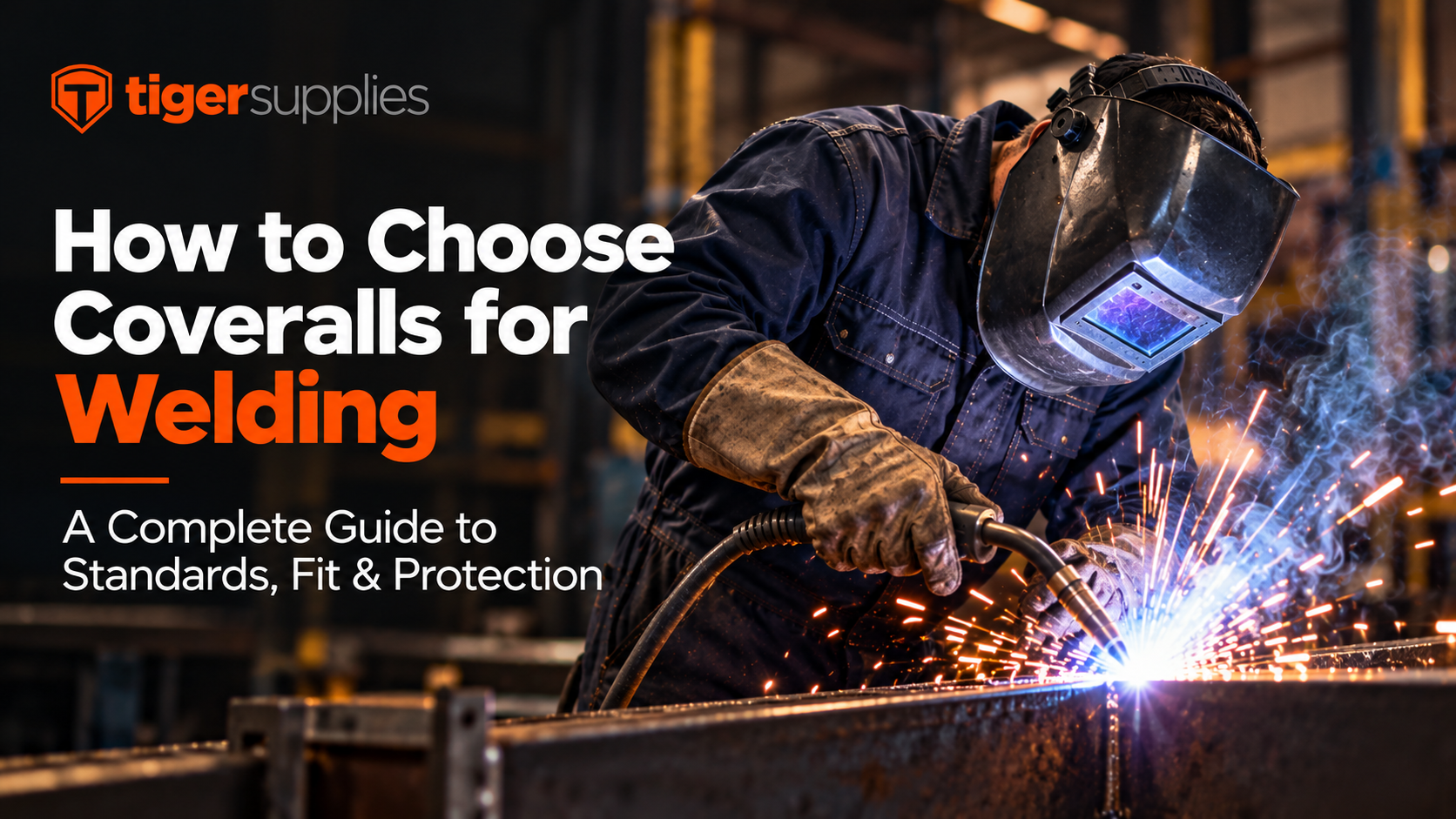
Welding is dangerous work. Every day, welders face arc flash, radiant heat, and sparks that can cause severe burns. The right coveralls protect your skin. The wrong ones leave you exposed.
But choosing welding coveralls isn't simple. You need to understand standards. You need the right fit. You need to know which type suits your work.
This guide covers everything you need to know. We'll walk through standards, materials, design, fit, and how to actually choose the right pair for your workplace. By the end, you'll know exactly what to look for.
Understanding Welding Hazards & Why Standards Matter
Arc Flash & Thermal Radiation
When you weld, temperatures exceed 4000°C. Arc flash sends intense heat and radiation toward your body, causing deep third-degree burns in seconds. Sparks are molten metal that ignite fabric. Cotton coveralls protect because they burn slowly, unlike synthetics that melt into your skin. Radiant heat invisibly radiates from the arc, heating your body even when you're not directly exposed. This is why heavier materials work better, they insulate you. Standards exist because burns are preventable and workers need real protection.
Radiant Heat & Sparks
Sparks landing on arms, chest, and legs burn through poor-quality fabric in seconds. Synthetic fabrics are dangerous, polyester and nylon melt and fuse to your skin, making burns worse. 100% cotton is naturally spark-resistant and has protected welders for decades. The fabric chars without melting, giving your skin precious reaction time. Heavier fabric offers better protection: lightweight cotton (250–350 gsm) suits light environments; heavy-duty cotton (500+ gsm) protects high-temperature work. Choose based on your actual hazards.
EN ISO 11611 vs EN ISO 11612: What's the Difference?
EN ISO 11611 is the main UK/EU standard for welding coveralls, what you'll see on every proper label.
EN ISO 11612 is a secondary standard for heat and flame-resistant clothing. Some premium coveralls meet both standards for extra protection. If a coverall says "EN ISO 11611 + EN ISO 11612," it offers enhanced thermal resistance beyond the basic requirement.
You don't need to memorize the difference. Just know: if the label shows both standards, you're getting better heat protection. Either way, always check for the CE mark and Class 1 or Class 2 rating on the label.
Types of Welding Coveralls: Finding the Right Fit for Your Work
Standard Welding Coveralls (Cotton-Based)
Standard welding coveralls are 100% cotton or cotton-polyester blends, naturally or chemically flame-resistant. They cover arms, legs, torso, and back, meeting EN ISO 11611 requirements. Use them for controlled, indoor welding without extreme temperatures. They're affordable and suitable for regular work in standard environments without prolonged high-heat exposure.
Fire-Retardant Welding Coveralls
Fire-retardant coveralls offer enhanced thermal protection for Class 2 high-temperature environments. They resist extreme heat longer, withstand repeated use and washing without losing protective properties, and are more durable than standard options. Use them for structural steel, underwater welding, or consistent intense radiant heat exposure. They cost more but last longer and justify the investment for high-risk work.
Disposable Welding Coveralls
Disposable coveralls are lightweight, single-use options made from less heavy-duty materials. Useful for occasional welders, contractors who don't weld regularly, or when contamination is a concern. Don't use them for regular, heavy-duty welding, they won't withstand constant heat exposure or offer equivalent protection. They're unsuitable for daily welding and wasteful if you work frequently.
Don't use disposables for regular, heavy-duty welding. They won't hold up to constant heat exposure. They don't offer the same level of protection as reusable options. They're also wasteful if you're welding every day.
EN ISO 11611 Standards Explained: Class 1 vs Class 2
What is EN ISO 11611?
EN ISO 11611 is a European standard defining requirements for welding protective clothing including design, materials, testing, and marking. It applies to all occupational welding: factories, workshops, construction sites. When you buy coveralls marked EN ISO 11611, they've been tested and meet minimum protection standards based on decades of research. The standard exists because burns are preventable and workers need real protection.
Class 1 Protection: Basic Hazard Environments
Class 1 coveralls protect against basic welding hazards in moderate arc flash and non-extreme temperatures. They offer arc flash protection, moderate radiant heat resistance, and spark protection. Suitable for MIG welding, light TIG work, and general factory welding in controlled, indoor environments. Class 1 is entry-level protection, adequate for many welders in typical workshops, but not for high-temperature structural work.
Class 2 Protection: High-Temperature & High-Risk Environments
Class 2 coveralls protect against higher heat and radiant heat levels, offering extended protection and better thermal insulation. They provide enhanced arc flash protection, high radiant heat resistance, spark protection, and optional orbital protection (extra material around eyes/face). Use Class 2 for structural steel welding, overhead welding, heavy-duty work, and consistent intense radiant heat exposure.
How to Identify EN ISO 11611 Coveralls
Look for three things on the label:
- CE Mark – Shows the coverall meets European safety standards
- EN ISO 11611 – The specific standard the coverall meets
- Class Rating – Either Class 1 or Class 2
If you don't see all three, the coverall isn't properly certified, don't buy or wear it. The manufacturer's name should also be on the label. Choose brands with good reputations and buy from trusted suppliers.
Material Selection: Why Cotton & Flame-Resistance Matter
The material your coveralls are made from determines how well they protect you. Cotton offers natural spark resistance, while synthetics can melt into your skin and cause severe burns, making material choice critical for safety.
100% Natural Cotton (Heavyweight)
Heavyweight cotton (320–500 gsm) is the gold standard for welding coveralls. It's naturally resistant to molten metal sparks, when a spark lands on cotton, it chars without melting. Cotton doesn't fuse to your skin when heated, unlike synthetics that stick and worsen burns. Heavyweight density resists heat penetration. It's affordable, durable, and has protected welders for decades.
Flame-Retardant Treated Cotton
Flame-retardant cotton is 100% cotton treated with chemical flame-resistant coatings, adding extra thermal protection without changing natural properties. It resists ignition longer, provides better radiant heat insulation, and maintains protection through 30–50+ washes. Use it for high-temperature environments and heavy-duty, long-term welding when the slightly higher cost is justified.
Why Avoid Synthetics (Polyester, Nylon)
NEVER wear synthetics in welding. Polyester melts at 250°C, nylon at 200°C, welding sparks exceed 1000°C. When synthetics melt, they stick to skin, turning second-degree burns into third-degree burns. Avoid anything with more than 10–15% synthetic content. Read labels carefully, don't assume cotton based on appearance alone.
Material Weight & Durability
Heavier coveralls provide more protection but less comfort; lighter coveralls offer comfort with less protection, balance based on your work environment. High-temperature work requires heavier fabric. Quality coveralls last 6–12 months with regular use, making them cheaper per use than cheaper alternatives that fall apart after three washes.
Design Features That Protect You: What Separates Quality from Cheap Coveralls
The difference between a coverall that protects and one that fails comes down to design. Every feature below exists because welders learned the hard way what works and what doesn't.
Straight Trouser Legs
Cuffs trap sparks. Sparks sit in the cuff, get hotter, burn through fabric, and burn skin. Straight trouser legs let sparks fall through without creating heat pockets. Many cheap coveralls have cuffs because they're easier to sew. Quality coveralls have straight legs because they're safer. Check trouser design before buying, straight legs only.
Trouser-to-Boot Overlap Closes the Gap
The gap between trouser leg and boot is a vulnerability, sparks fall down your leg into your boots and burn your feet. Quality coveralls have trouser legs that overlap your boot tops, closing the gap when worn. Without overlap, you're exposed. With overlap, you're protected. This design separation distinguishes quality from cheap alternatives.
Covered Fastenings (Zips & Buttons)
Zips and buttons are metal and conduct heat. When sparks land on exposed metal, heat travels to your skin. Quality coveralls have fabric flaps covering zips or use non-conductive fastenings, stopping heat conduction to your body. Before buying, check the front zip, is it covered? Yes = good. Exposed = don't buy it.
Chest Pockets & Hi-Vis Elements
Chest pockets store small tools, notes, or lighters without compromising protection if designed well. Hi-vis reflective strips or fluorescent panels keep you visible on busy sites without reducing protection when integrated properly. Some hi-vis coveralls include extra pockets for convenience, this is acceptable as long as core protection remains intact.
Reinforced Areas: Double Protection Where It Matters
High-risk areas, shoulders, chest, and sleeves, take the most heat and sparks and receive extra material layers for reinforcement. Extra thickness in vulnerable zones provides better protection without making the entire coverall heavy and uncomfortable. When inspecting coveralls, look for visible reinforcement: extra stitching or thicker fabric in key areas indicates quality construction.
Fit & Sizing: The Often-Overlooked Key to Effective Protection
A coverall that doesn't fit properly creates gaps where heat and sparks penetrate, and restricts movement so you remove it, both ending in injury. The right fit means no gaps, full mobility, and comfortable all-day wear that keeps you protected.
Why Fit Matters
Loose coveralls create gaps where heat and sparks enter. Tight coveralls restrict movement, you can't bend, squat, or reach properly. Uncomfortable workers remove PPE, causing accidents. The right fit ensures no gaps, full mobility, and the coverall stays in place when you move, so you'll actually wear it consistently.
Taking Measurements: Do It Properly
Use a soft measuring tape and measure: Chest circumference (fullest part, snug but not tight), Waist (natural waist, not belt position), Inseam (inside leg from groin to ankle, critical for trouser length), and Sleeve length (shoulder to wrist with arm bent slightly). Compared to the manufacturer's size chart, not your regular clothing size, workwear sizing differs.
The Mobility Test: Your Fit-Check
Once you have the coverall, test: (1) Bend at waist, fabric moves, doesn't restrict; (2) Squat down, achieve full depth without binding; (3) Reach overhead, full shoulder mobility, no binding; (4) Reach to toes, trouser legs stay in place. Pass all four = good fit. Struggle with any = wrong size.
Men's Welding Coveralls
Standard men's sizing runs XS to XXXL and is tailored for male proportions: broader shoulders, slimmer hips, male-shaped armholes. Measure yourself accurately. Check the manufacturer's size chart. Order based on measurements, not usual clothing size.
Women's Welding Coveralls
Most suppliers fall short on women's options. Women-specific coveralls are cut differently, they accommodate curves, feature different armhole placements and shoulder widths, and taper at the waist instead of hanging straight. Men's coveralls fit poorly on women, creating loose/tight gaps exposing skin. Insist on women's sizing. Quality suppliers now offer it. Don't settle for unisex or men's alternatives.
Larger Sizes: Everyone Deserves Proper Fit
Extended sizing up to XXXXL is available from quality suppliers. Measure accurately, check the size chart, perform the mobility test, regardless of size. Don't buy oversized thinking it'll work, loose fabric creates heat pockets, gets caught on equipment, and puts you at risk. The right size, whatever that is, protects you best.
Selecting the Best Coveralls for Your Workplace
Choosing the right coveralls means assessing your actual hazards, matching the protection level, and investing in quality that protects you long-term. Follow these six steps to make an informed decision that keeps you safe without overspending.
Step 1: Assess Your Welding Environment
Understand your actual work environment: Is it indoor or outdoor? What type of welding (MIG, TIG, structural)? How high is arc flash risk? How intense is radiant heat exposure, hours in front of arc or short bursts? Be honest about your environment. This determines which class of coverall you need.
Step 2: Determine Your Required Class
Moderate environments need Class 1 for basic protection. High-temperature or high-risk environments need Class 2 for better protection and expanded hazard coverage. When in doubt, choose Class 2, better protection is always safer than inadequate protection. Check your employer's guidelines or ask your safety manager for help assessing actual risks.
Step 3: Choose Material & Flame-Resistance
For standard environments, 100% cotton is effective and affordable. For high-temperature work, choose flame-retardant cotton, it lasts longer and offers better protection. Avoid disposables for regular work; they're wasteful and insufficient. If welding full-time, invest in quality reusable coveralls. You'll save money long-term and stay safer.
Step 4: Select Your Size & Fit
Measure yourself accurately and use the manufacturer's size chart, not regular clothing size. Once you have the coverall, perform the mobility test. Ensure trouser legs overlap boots and sleeves reach wrists. If the fit isn't perfect, try a different size. Getting the right size matters more than brand preference.
Step 5: Check Features Against Your Needs
Must-haves: EN ISO 11611 mark, Class rating, cuffless trousers, boot overlap, covered fastenings. Nice-to-haves: hi-vis strips, multiple pockets, reinforced shoulders and chest. Verify all markings on the label. Look for well-known suppliers with good reputations. Read reviews from other welders to validate quality.
Step 6: Budget Considerations
Cheap coveralls fall apart after a few washes, constant replacement becomes expensive. Quality coveralls cost more upfront but last 6–12 months of regular use, lowering cost-per-use. A $50 coverall lasting 2 months costs $300/year; a $100 coverall lasting 12 months costs $100/year. Bulk orders often qualify for discounts. Calculate long-term cost, not upfront price.
Conclusion
Choosing the right welding coveralls isn't complicated, it protects you from arc flash, radiant heat, and sparks. Know the EN ISO 11611 standards, honestly assess your actual hazards, get proper fit, and invest in quality. Cheap coveralls fail quickly; burns scar, hurt, and cost you work time. The right coveralls, properly fitted to your body and matched to your environment, prevent injury and save lives. Your safety is worth the investment.
Frequently Asked Questions
How to Pick the Right Size Coveralls?
Measure inseam, chest, waist, and sleeve length accurately. Use manufacturer's size chart, not regular clothing sizes. Perform mobility test: bend, squat, reach overhead and down. Ensure trouser legs overlap boots and sleeves reach wrists.
What is the Correct PPE for Welding?
Minimum PPE includes coveralls meeting EN ISO 11611, safety boots, welding gloves, and a helmet with proper shade. Enhanced PPE includes Class 2 coveralls, face shield, apron, and arm guards for protection.
What are the Different Types of Coveralls?
Standard coveralls are 100% cotton and most affordable for moderate environments. Fire-retardant coveralls use treated cotton, better for high-temperature work and more durable. Disposable coveralls are single-use, lightweight options for occasional work or contamination concerns.
Do Welders Wear Coveralls?
Yes, coveralls are mandatory PPE in welding workplaces. Not wearing them violates safety regulations and creates employer liability. Coveralls protect you from burns and arc flash, making them essential rather than optional equipment.
Can I Wash and Reuse Welding Coveralls?
Reusable coveralls withstand 30-50+ washes in regular detergent, hang or tumble-dry on low heat. Each wash slightly reduces flame-resistance, but quality coveralls hold well. Replace after 50+ washes. Disposable coveralls are single-use only.
How Often Should I Replace Welding Coveralls?
Replace coveralls when you see burns, tears, fading, or flame-resistance loss. With regular use (5 days/week), expect replacement within 6-12 months. If sparks stick more, material feels thin, or holes appear, replace immediately.
What's the Difference Between Class 1 and Class 2?
Class 1 provides basic protection for moderate environments: general factory welding, MIG work, light TIG. Class 2 provides higher protection for extreme environments: structural steel, heavy-duty, high-temperature work. Ask your safety manager if unsure.
Are Women-Specific Welding Coveralls Better Than Unisex?
Yes, women-specific coveralls are tailored for female body shapes and fit better around curves. Men's or unisex coveralls create gaps, exposing skin to burns. Women deserve properly-fitting PPE. Quality suppliers now offer women-specific options.