How to Protect Floors During Construction and Renovation: A Practical Guide
Posted by Tiger Supplies on 21st Jul 2026
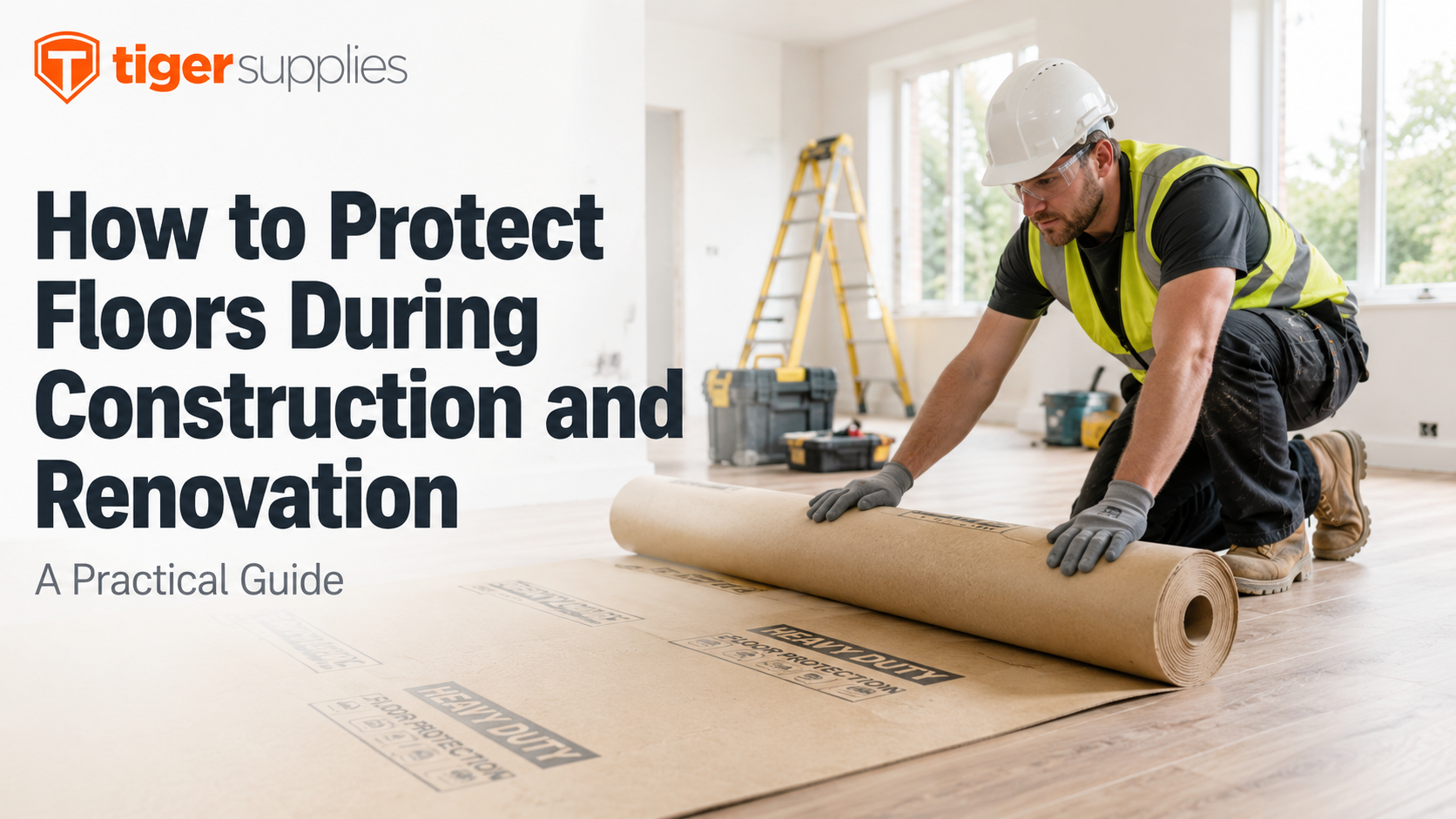
Floor protection prevents avoidable damage during construction and renovation work, paint spills, dust, scratches from tools and foot traffic, and staining from wet trades can all turn into costly repair bills once a job is finished.
The right approach isn't just "put something down," though, it depends on the floor you're protecting and the trade being carried out.
This guide covers why floor protection is worth planning properly, which material suits which job, and how to handle protection during specific trades like plastering and tiling.
Why Floor Protection Matters During Construction and Renovation
Unprotected floors are one of the most common sources of post-project disputes and unplanned costs on a site. Paint drips and plaster splashes are difficult to remove from finished flooring without damage, dust and grit ground in by foot traffic causes fine scratching on hard floors, and dropped tools or equipment can dent or crack surfaces that are expensive to replace. On newly laid or curing floors, screed in particular, the risk isn't just physical damage but trapping moisture underneath the wrong type of covering, which can interfere with curing. The cost of protecting a floor properly is almost always lower than the cost of repairing or replacing it once work is done, which is why it's worth treating as a planned step rather than an afterthought.
Choosing the Right Floor Protection Material for the Job
Different floors and different risks call for different materials, using the wrong one either under-protects the surface or, in the case of curing screed, can actively cause problems.
|
Floor / Situation |
Recommended Material |
Why |
|
Finished hard flooring, tiles, laminate |
Rigid protection board |
Resists impact, scratches and dents from tools and foot traffic |
|
Newly laid or curing screed |
Breathable board |
Protects the surface while allowing moisture to escape during curing |
|
Carpets |
Carpet protection film |
Shields against spills and staining without trapping moisture in the fibres |
|
General dust and light foot traffic |
Dust sheets |
Quick to lay, cost-effective for lower-risk areas |
For finished or high-value hard flooring, hard floor protection boards are the standard choice, they're rigid enough to resist impact and scratching from tools and equipment.
For general site protection where you need something versatile and easy to cut to size, fluted board, also commonly known as Correx, is a lightweight, durable option used across floors, walls and site hoarding alike.
If the job involves carpeted areas, carpet protection film is designed to guard against spills and staining without trapping moisture against the fibres the way a solid board would.
And for lower-risk areas where the main concern is dust and light foot traffic rather than impact, dust sheets are the quickest and most cost-effective option to lay down.
Protecting Floors During Specific Trades
Different trades create different risks, so the protection approach should match the work being done. Plastering is one of the messier trades for flooring, wet plaster drips and splashes can stain and are far harder to remove once dried, so a fully covered, edge-taped protection layer matters more here than in drier trades. Tiling carries a different risk: dropped tiles, cut edges and grout tools can scratch or chip a finished floor, so rigid board protection along the work path is worth the extra step even for a short job. Painting and decorating sit somewhere in between, drips are the main concern, but the job also tends to involve more foot traffic in and out of the room, so protection needs to hold up to repeated movement, not just splashes. And it's not only floors at risk during any of these trades, protecting walls, doors and fixtures too is worth planning for at the same time, since paint and plaster don't stay confined to the floor.
Conclusion
Getting floor protection right comes down to two questions: what's the floor, and what's the risk. Match rigid board, breathable board, carpet film or dust sheets to the job in front of you, and take extra care during messier trades like plastering and tiling. If you're ready to specify what you need, browse our full range of floor protection for every floor type and site situation.
FAQs
What paper is used to protect floors during construction?
Heavy-duty kraft or rosin paper is the most common paper-based option, laid as a breathable barrier under other protection or on its own for lower-risk areas. For anywhere with real foot traffic or tool use, though, a rigid board gives far better protection than paper alone.
What is the best floor protection?
There's no single "best" material, it depends on the floor and the risk. Rigid board suits finished hard flooring, breathable board suits curing screed, carpet film suits carpeted areas, and dust sheets suit lower-risk, dust-only situations, as covered in the comparison above.
How to protect the floor when plastering?
Cover the full floor area with a taped, sealed protection layer that can handle wet splashes, since dried plaster is much harder to remove than fresh spills. Pay particular attention to edges and skirting lines, where drips tend to collect.
How to protect tiles from scratches during construction?
Lay rigid protection board along walkways and work areas rather than relying on dust sheets alone, since tiles scratch and chip easily from dropped tools, grit, and cutting equipment. Board protection should stay down for the full duration of any trade working near the tiled area, not just during the riskiest tasks.