Tonne Bags vs FIBC Bags: Which Should You Choose for Construction?
Posted by Tiger Supplies on 1st Oct 2026
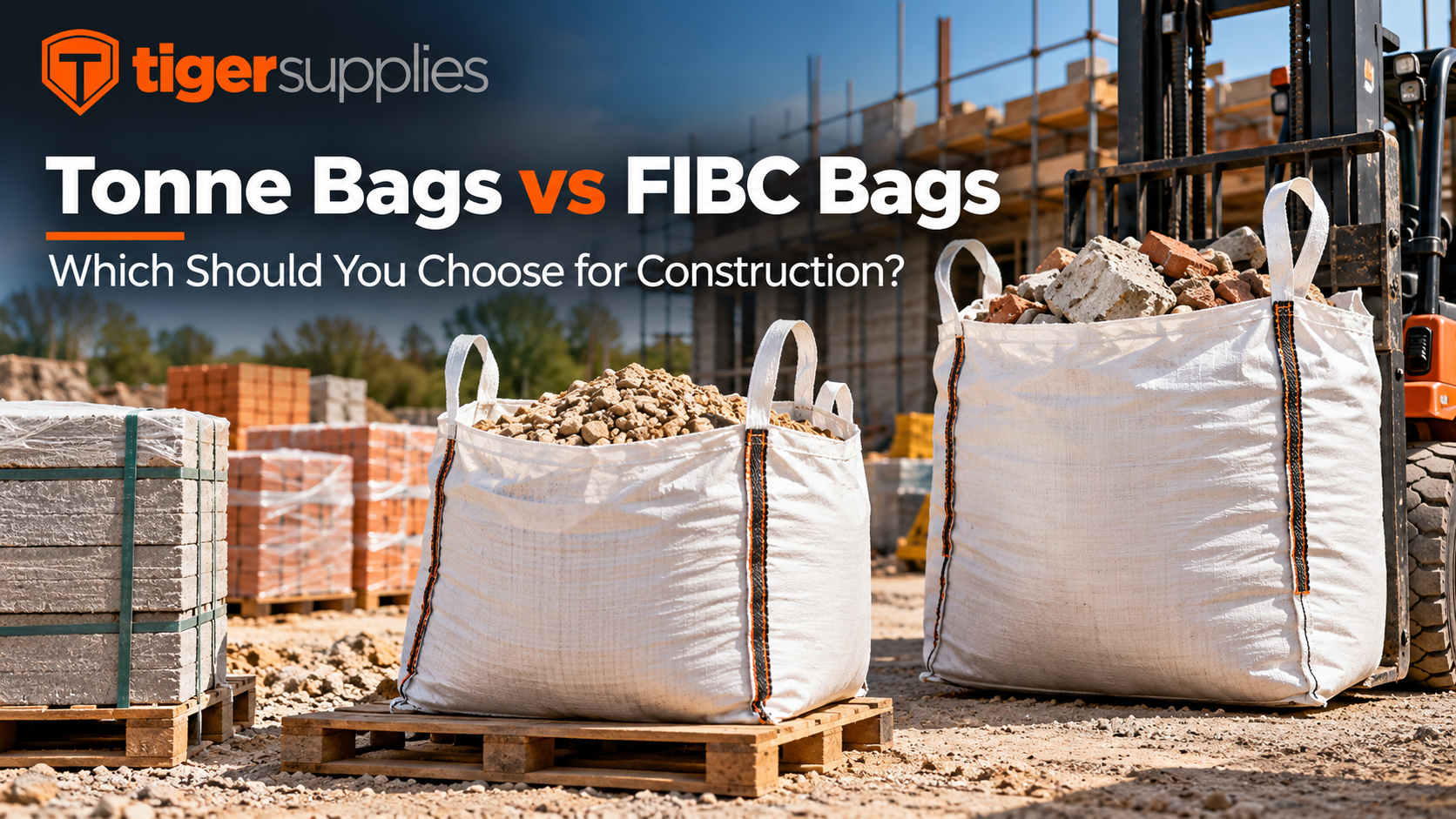
Tonne bags and FIBC (Flexible Intermediate Bulk Container) bags are essential for construction, landscaping, and waste management. Understanding the differences between these bulk bags helps you choose the right solution for your project.
This guide covers everything you need to know about tonne bags, FIBC bags, their applications, safety considerations, and cost implications, so you can make informed purchasing decisions for your business. Whether you're sourcing bags for a small project or bulk purchasing for ongoing operations, explore our site bags category to see the full range of options available
What is a Tonne Bag?
A tonne bag is a large, flexible bulk container designed to hold approximately one metric tonne (1000kg) of material. Made from woven polypropylene, tonne bags feature reinforced stitching and typically include four lifting loops for safe handling with material handling equipment. They're engineered for construction and landscaping applications, transporting aggregates, sand, gravel, soil, and demolition waste.
Tonne bags offer a cost-effective alternative to traditional rigid containers and are reusable across multiple projects, making them popular for commercial operations across the UK. Ready to get started? Tiger Supplies stocks premium 1 tonne bulk builders bags with next-day UK delivery and competitive bulk pricing.
What is an FIBC Bag?
FIBC stands for Flexible Intermediate Bulk Container, a classification that technically includes tonne bags but covers a broader range of bulk bags. FIBCs are industrial-grade flexible containers designed to hold powders, granules, and loose materials. They come in various sizes and load capacities (500kg to 2000kg+), with different configurations for specific applications. FIBC bags are constructed from woven polypropylene or coated materials, offering UV protection and durability. The key distinction: all tonne bags are FIBCs, but not all FIBCs are tonne bags. FIBCs serve industries from food processing to chemicals, while tonne bags specifically target construction and waste management sectors.
7 Types of FIBC Bags: How to Pick the Right One for Your Material
Selecting the right FIBC bag depends on your material type and handling requirements.
Standard polypropylene bags work for aggregates, sand, and general construction materials.
Conductive FIBC bags are essential when handling flammable or electrostatic-sensitive materials, preventing static buildup during loading and transport.
Coated or laminated bags provide moisture protection for materials like fertilizers or chemicals.
Vented bags allow airflow, ideal for materials that need to breathe during storage.
Unvented bags seal completely, containing fine powders and preventing dust escape.
Four-panel bags offer better stability for stacking, while baffle bags include internal baffles for improved load distribution.
For construction and site use, standard uncoated polypropylene tonne bags are most common, browse site bags for construction to compare types and specifications.
For hazardous materials or specialised applications, conductive or coated variants are required. Always check your material's specific requirements before ordering.
Tonne Bags vs FIBC Bags: Head-to-Head Comparison
|
Feature |
Tonne Bags |
FIBC Bags (General) |
|
Capacity |
1 tonne (1000kg) |
500kg–2000kg+ (varies) |
|
Primary Use |
Construction, landscaping, waste management |
Chemicals, food, powders, construction |
|
Material |
Woven polypropylene (uncoated) |
Woven or coated polypropylene |
|
Lifting Loops |
4 loops (standard, 30cm each) |
2–4 loops (varies by type) |
|
Cost |
£2–£5 per bag (bulk purchasing) |
£3–£10+ depending on specifications |
|
Reusability |
High (20–50+ uses) |
High (varies by coating/type) |
|
UV Resistance |
Standard polypropylene (moderate) |
UV-stabilised options available |
|
Handling |
Forklift, crane, or manual with loops |
Crane/forklift required |
|
Storage |
Outdoor (UV-stabilised types) |
Controlled environment (coated types) |
|
Stacking |
Up to 5 bags high |
Depends on bag type/load |
|
Discharge Method |
Top-fill, bottom-spout options |
Varies (sealed/spout/chute) |
|
Industry Standards |
Construction/landscaping standard |
ISO 9285 (industrial standards) |
Key Takeaway: Tonne bags are purpose-built for UK construction and waste management. FIBC is the broader industrial category, tonne bags are the construction-specific subset. For site use, tonne bags are the standard choice.
How to Choose: Decision Framework for Your Project
Choosing between tonne bags and FIBC bags requires evaluating three factors: material type, project scale, and handling requirements.
Material Type: Construction materials (sand, gravel, aggregates, demolition waste) align perfectly with standard tonne bags. If you're handling powders, chemicals, or hazardous materials, you need industrial FIBC bags with conductive or coated specifications.
Project Scale: Small landscaping jobs or single-project purchases favour basic polypropylene tonne bags. Large commercial operations benefit from bulk ordering (packs of 10+) and specialist bag types optimised for cost per tonne.
Handling Requirements: If you have forklift or crane access, standard tonne bags work well. For manual handling on small sites, consider whether the four lifting loops provide adequate safety. Hazardous materials always require conductive FIBC bags regardless of scale.
Final Decision: Start with standard polypropylene tonne bags if you're in construction or landscaping, or browse our detailed bulk bags buying guide for expert recommendations. Only upgrade to specialist FIBC bags if your material demands it (chemicals, static-sensitive powders, moisture-sensitive goods). Always verify load capacity matches your material density, sand and gravel are heavier than soil or demolition waste.
Safety Considerations When Using Tonne Bags and FIBC Bags
Safety is critical when handling bulk bags on construction sites. Lifting safety comes first, always use certified equipment (forklifts, cranes, or manual hoists) rated for the bag's full weight. Tonne bags feature four lifting loops; ensure all four are engaged during lifting, never less. Damaged loops indicate the bag needs replacement.
Ground stability matters: place bags on level, compacted ground to prevent tipping. Stacking requires proper technique, most standard tonne bags safely stack 5-high when properly positioned. Check local site regulations; some projects limit stacking height.
Material compatibility is essential: verify the bag material suits your material type. Standard polypropylene handles construction materials well but fails with corrosive chemicals, requiring specialist coated bags. Always read technical data sheets.
Storage and weather: standard tonne bags withstand outdoor UV exposure due to UV-stabilised polypropylene, but extended storage in direct sunlight degrades material over time. Coated bags offer better long-term outdoor protection. Inspection before use prevents accidents, check for tears, abrasion, or weak stitching before loading.
Disposal: reuse bags until they fail, but dispose of damaged bags responsibly. Don't overfill, pack density matters more than volume.
Cost Analysis: Tonne Bags vs FIBC Bags
Tonne Bag Costs (UK Market)
Standard polypropylene 1-tonne bags cost £2–£5 per unit when purchased in bulk (packs of 10). Buying single bags increases unit cost to £4–£8. Annual material cost for a small construction business using 500 bags yearly: £1,000–£2,500. Specialist variants (vented, conductive) range £6–£12 per bag.
FIBC Bag Costs
General-purpose FIBCs start at £3–£5 for basic 1-tonne variants. Coated or conductive bags reach £8–£15+ per unit depending on specifications and load capacity. Hazardous-material-rated bags cost £12–£25+.
Cost Comparison
Standard tonne bags are 30–40% cheaper than specialist FIBCs for basic construction use. The cost difference widens when comparing bulk purchases (100+ bags), where tonne bags offer better economies of scale.
Hidden Costs
Factor in replacement frequency. Quality tonne bags last 20–50 uses; cheaper variants may last only 5–10 uses, reducing overall cost advantage. Disposal fees for damaged bags vary by region.
ROI Insight
For construction and landscaping businesses, investing in quality reusable tonne bags over disposable alternatives saves 60%+ annually.
Real-World Applications: Where Tonne Bags Excel
Construction Sites
Tonne bags transport aggregates, sand, and ready-mix concrete. Bulk purchasing (packs of 10) reduces per-project material costs significantly.
Landscaping Projects
Garden centres and landscapers use tonne bags for soil, mulch, and gravel distribution. Reusability across seasonal projects maximises ROI.
Waste Management
Demolition contractors use tonne bags for rubble containment and transport. Standard bags handle brick, concrete, and mixed waste efficiently.
Refurbishment Projects
Indoor renovation work benefits from tonne bags for dust containment and debris removal. The open-top design allows easy filling and discharge.
Site Clearance
Facilities managers use tonne bags for general site waste, reducing skip hire costs. Bulk bag purchasing through suppliers like Tiger Supplies provides reliable, cost-effective solutions, order bulk builders bags online with fast UK delivery.
Key Insight
Any project moving loose bulk materials benefits from tonne bags. Their affordability, reusability, and compatibility with standard handling equipment make them the default choice across UK construction and landscaping sectors.
Environmental and Sustainability Considerations
Tonne bags' environmental impact centres on reusability and end-of-life management. A single polypropylene bag used 30 times across multiple projects dramatically reduces per-use environmental cost compared to single-use alternatives.
Manufacturing Impact
Polypropylene production requires fossil fuels, but tonne bags' long lifecycle amortises this cost. A bag used 30 times has 1/30th the per-use environmental footprint of disposable alternatives.
End-of-Life Options
Quality tonne bags remain viable for 20–50 uses before material degradation. At end-of-life, polypropylene is recyclable, though UK recycling infrastructure for contaminated bags (dirt, construction residue) remains limited. Many contractors reuse bags in secondary applications before disposal.
Comparison
Switching from skip hire (weekly waste collection via diesel trucks) to bulk bag transport reduces transport emissions significantly. A single large truck collecting 20 bulk bags generates far less carbon than four separate skip collections.
Best Practice
Maximise reusability, use bags 30+ times before disposal. Source from suppliers like Tiger Supplies who stock consistent bag quality, reducing replacement waste from premature failure.
Ready to Order Bulk Bags for Your Project?
Tiger Supplies provides a complete range of professional bags for construction, landscaping, and waste management. Whether you need 1 tonne bulk builders bags for your next project or want to explore our full site bags category, we offer competitive pricing, bulk discounts, and next-day UK delivery.
Frequently Asked Questions
Can I reuse tonne bags?
Yes. Quality polypropylene bags withstand 20–50 uses depending on material type and handling care. Inspect for tears and weak stitching before reuse.
What's the weight limit for tonne bags?
Standard bags hold 1 tonne (1000kg), but actual capacity depends on material density. Sand is heavier than soil, always verify your material's density before filling.
Are tonne bags waterproof?
Standard polypropylene bags are water-resistant but not waterproof. Prolonged water exposure degrades material. For moisture-sensitive materials, use coated bags.
Where can I buy bulk bags in the UK?
Tiger Supplies offers 1 tonne bulk builders bags in packs of 10, with next-day UK delivery available. Bulk purchasing reduces per-unit cost significantly.
Do I need a licence to transport tonne bags?
No special licence required for standard construction materials. Hazardous materials (chemicals, powders) require appropriate bag types and compliance with transport regulations.
How should I store empty bags?
Store in cool, dry conditions away from direct sunlight. UV exposure degrades polypropylene over time, reducing bag lifespan.