Carpet Protector Film VS Dust Sheets: Choosing the Right Floor Protection for Each Job
Posted by Tiger Supplies on 3rd Oct 2026
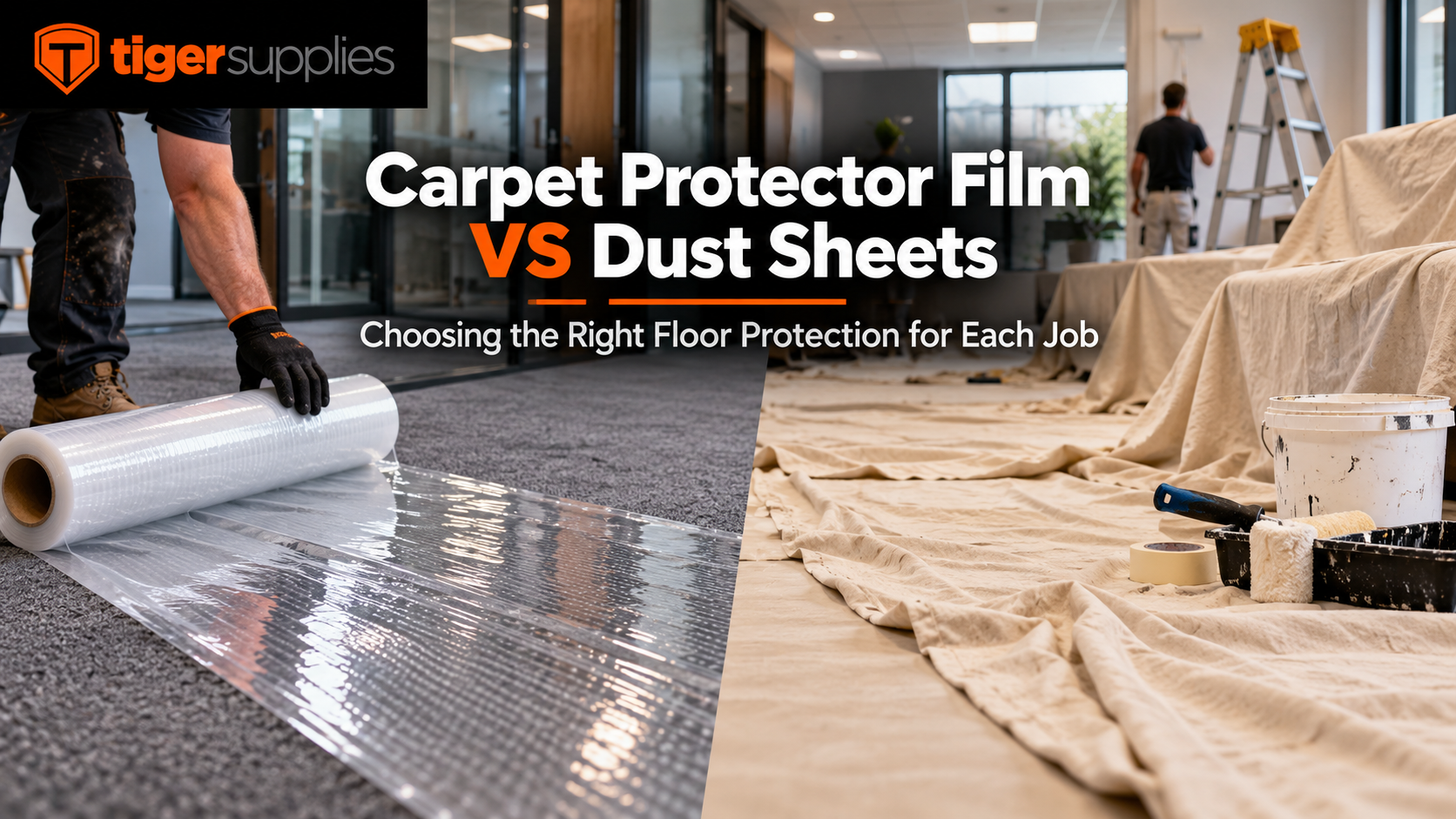
Refurbishment work puts floors under pressure. Dust, paint, plaster and trades moving in and out can all mark or damage carpet, and fixing a stained or torn carpet is usually more costly than protecting it in the first place. Two options come up most often: carpet protector film and dust sheets.
They are not the same product, and they don't do the same job.
Carpet protector film is a self-adhesive layer that sits on the carpet itself. Dust sheets are loose covers laid over a surface. The right choice depends on what needs protecting, how the space is used and what work is happening around it.
Other materials, such as rigid boards and breathable boards, suit different floors. Our wider guide to floor protection on construction and renovation sites covers them.
This guide focuses on the decision between carpet protector film and dust sheets.You'll see which option suits stairs, rooms, and high-traffic areas, and when using both makes sense.
Carpet Protector Film and Dust Sheets at a Glance
The table below gives a quick view of how each option works. Use it as a starting point, then check the details for your own job.
|
Factor |
Carpet protector film |
Dust sheets |
|
What it protects |
The carpet surface, from foot traffic and spills |
Floors, furniture and fixed surfaces, from dust, debris and paint |
|
Where it works best |
Carpeted stairs, landings and corridors |
Rooms being decorated, or areas with a lot of dust and debris |
|
How it's fixed in place |
Self-adhesive, rolled directly onto the carpet |
Loose-laid, held down by weight or tape at the edges |
|
How it's removed |
Lifted off once the work is complete |
Gathered up after the works, and many types can be shaken out and reused |
|
Main limitation |
Sticks only to carpet, so it doesn't cover furniture or walls |
Can slip, bunch or move, creating a trip hazard |
Both options protect floors, but they work in different ways. Carpet protector film is a surface layer that stays on the carpet. Dust sheets are a covering that can go over almost anything, but they move more easily. Neither covers every job on its own, so match the option to the area and the work.
How Carpet Protector Film Works on Site?
Carpet protector film is a self-adhesive layer that rolls straight onto the carpet. Its adhesive grips the carpet pile, so the film stays put as people walk across it. That grip is the main reason it suits areas where a loose cover could move.
Because the film is attached to the carpet, it doesn't rely on weight to stay in place. That makes it practical on carpeted stairs and landings, where a loose cover can bunch up or slide. It also suits corridors and entrance areas, where trades pass through often and the carpet takes most of the wear.
Lay it in straight lines, smooth it as you go and work out any air pockets before they set. Film only covers the carpet it's stuck to, so it doesn't protect furniture, walls or fixed fittings. For those, you'll need a separate covering. If you're planning a larger area, the self-adhesive carpet protection film and carpet protectors range on our site is the place to start.
How Dust Sheets Work and Where They Fall Short?
Dust sheets are loose covers laid over a surface. They catch dust, debris and paint drips, and they can cover furniture, fixtures and whole rooms. Because they don't stick to anything, they're quick to lay and easy to move from one area to the next. A dust cover suits a room being cleared and decorated, where the main job is keeping dust off everything.
That flexibility is also their weakness. A loose sheet can slide, bunch or lift at the edges, especially on stairs and in busy corridors. A bunched sheet becomes a trip hazard, and a sheet that has moved may leave part of the floor exposed. Taping the edges and checking the sheet regularly helps, but it doesn't remove the risk completely.
Dust sheets are the better choice when the job is about covering a whole room, keeping dust under control or protecting furniture. They're less suited to high-traffic routes where the cover needs to stay fixed. For sheets for your own job, our dust sheets and polythene for floor cover range is a good place to compare options.
Carpet Protector Film VS Dust Sheets: Choosing the Right Option for Stairs and High-Traffic Areas
Stairs and high-traffic routes are where the choice matters most. A cover that moves can cause a trip hazard as well as failing to protect the floor.
Stairs
Loose sheets are the main concern on stairs. Each step can pull the cover, and it can bunch at the nosing, which is the front edge of each step. Film is fixed to the carpet on every tread and riser, so it stays in place as people use the stairs. For a staircase during a fit-out, film is usually the safer choice.
Landings and corridors
These are often where trades come and go. Film holds up well under repeated foot traffic on the carpet. Sheets can work where traffic is light and the main need is dust control, but their edges need taping and checking through the day.
Rooms with furniture
Once the job involves furniture or wall surfaces, film alone won't do the job. Sheets cover the items, and film can still protect the carpet underneath.
A simple rule: if people walk over the area all day, choose the option that stays fixed. If the job is about dust and drips, choose the option that covers.
Carpet Protector Film vs Dust Sheets: Comparing Upfront and Total Refurbishment Costs
The cheapest option per roll or per sheet isn't always the cheapest option on the job. Compare the full cost, not just the price of the material.
Four costs make up the total. There's the material itself, the labour time to lay and remove it, the cleaning needed once the works finish, and the cost of any damage if the protection fails.
To compare two options, estimate the time to lay and remove each one across the same area. Then add how often the cover will need fixing, re-taping or replacing during the job. Finally, add the likely cost of damage if the floor is marked. A sheet that needs re-taping several times a day can cost more in labour than a film that stays put once it's laid.
Carpet Protector Film VS Dust Sheets: Which Option Suits Your Job?
Use this table to match the job to the option that fits. Where a job has more than one risk, the table shows both options.
|
Job type |
Recommended option |
Why |
|
Carpeted stairs and landings during a fit-out |
Carpet protector film |
It stays fixed to each tread and riser, so it won't bunch or slide |
|
Painting or plastering a room with furniture left in |
Dust sheets |
They cover furniture, fixtures and walls, and catch drips |
|
Carpeted corridor with heavy trade movement and no furniture |
Carpet protector film |
It protects the carpet under constant foot traffic |
|
Dust and debris control across a wide area |
Dust sheets |
They cover large areas quickly and are easy to move |
|
Carpeted room with paint work and heavy traffic |
Both |
Film on the carpet for foot traffic, sheets over furniture and walls |
The table above covers the most common situations, but every site is different. Start with two questions: what needs covering, and how much movement will the area see? Those answers usually point to one option.
Can You Use Both on the Same Job?
Yes, and on many refurbishments it's the right approach. Film protects the carpet where people walk, and sheets cover the furniture, fixtures and walls that film can't reach.
Layering works best when the film goes down first and the sheets go on top. Keep sheets off the stair nosings and any high-traffic route, since a sheet over film can still bunch if it's not taped or weighted down. Check the edges regularly, and remove any sheet that has slipped before it becomes a trip hazard.
Conclusion
Neither carpet protector film nor dust sheets is the better option in every case. Choose film where the carpet takes the foot traffic, and choose dust sheets where the job is about covering furniture and keeping dust down. For many jobs, using both is the right answer.
Ready to specify what you need? Browse our carpet protection film and carpet protectors range, our dust sheets and polythene range, or browse our floor protection range for the full selection.
Frequently Asked Questions
Do dust sheets actually protect floors?
Yes, against dust, debris and paint drips, and they're useful for covering a whole room. They don't stay fixed on their own, so on high-traffic routes they need taping or extra protection.
Do carpet protectors work?
Carpet protector film works well on carpet, because it stays attached and resists foot traffic and spills. It doesn't protect furniture or walls, so it's one part of the plan, not the whole plan.
Is it worth protecting carpet during a refurbishment?
In most cases, yes. Repairing or replacing a damaged carpet usually costs more than protecting it, and a protected carpet also avoids disputes at handover.
Is carpet protector film or a dust sheet better for stairs and furniture?
For stairs, film is usually the better choice because it stays fixed. For furniture, dust sheets are the practical option, since film only covers the carpet. Many jobs need both. The job-by-job table in Section 7 shows how to match the two.
For other floor materials, such as boards and breathable board, see our wider guide to floor protection on construction and renovation sites.