EN ISO 20471 Hi-Vis Clothing Guide: Class 1, 2 & 3 Explained for UK Workplaces
Posted by Tiger Supplies on 7th May 2026
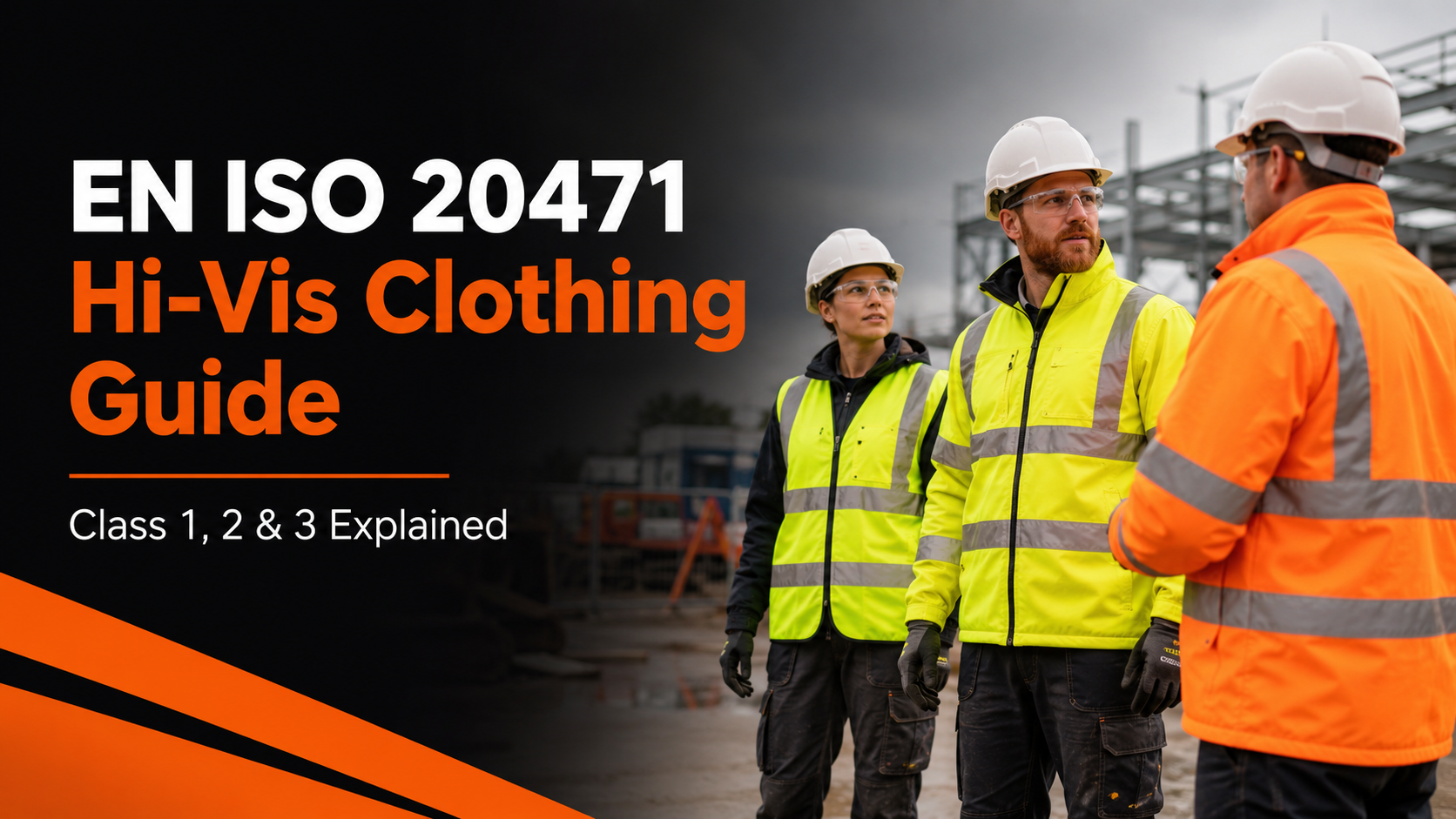
High-visibility clothing plays an important role in workplace safety, especially where workers need to be seen around vehicles, machinery, low-light areas or busy site environments. EN ISO 20471 is the recognised standard used to classify high-visibility clothing based on how visible a garment is in different working conditions.
For UK businesses, choosing the right hi-vis clothing is not just about picking a bright jacket or waistcoat. The correct class, garment type, colour, reflective material and condition all matter. This guide explains what EN ISO 20471 means, how Class 1, Class 2 and Class 3 hi-vis clothing differ, and how to choose suitable garments for construction, highways, warehousing, rail, logistics and general workplace use.
Browse our Hi Vis Clothing Range or explore our wider PPE equipment for workplace safety essentials.
What is EN ISO 20471?
EN ISO 20471 is the international standard for high-visibility clothing. It sets requirements for garments designed to visually signal the wearer’s presence in daylight, low-light conditions and when illuminated by vehicle headlights in the dark.
In simple terms, EN ISO 20471 helps buyers identify whether a garment provides an appropriate level of visibility for the job. The standard focuses on two main visibility elements:
Fluorescent background material — this helps the wearer stand out during daylight and poor weather conditions.
Retroreflective material — this reflects light back towards the source, such as vehicle headlights, helping workers remain visible in darker environments.
The standard classifies hi-vis garments into three performance classes: Class 1, Class 2 and Class 3. These classes are based on the amount of fluorescent and reflective material used in the garment. The higher the class, the greater the level of visibility.
For employers, site managers and procurement teams, EN ISO 20471 provides a practical way to select high visibility clothing based on workplace risk, job role and site conditions.
EN ISO 20471 Class 1, Class 2 and Class 3 Explained
EN ISO 20471 hi-vis clothing is divided into three classes. Each class reflects the minimum amount of visible material included in the garment. Class 1 offers the lowest level of visibility, while Class 3 offers the highest.
|
Class |
Visibility level |
Common use cases |
Typical garments |
|
Class 1 |
Lowest visibility |
Low-risk areas, warehouses, visitor roles, slow-moving vehicles |
Some trousers or basic hi-vis garments |
|
Class 2 |
Medium visibility |
Delivery yards, site visitors, utilities, lower-speed traffic areas |
Waistcoats, vests, polo shirts |
|
Class 3 |
Highest visibility |
Highways, roadworks, night work, rail, high-risk construction |
Jackets, coveralls, jacket and trouser combinations |
Class 1 hi-vis clothing
Class 1 garments provide the lowest level of visibility under EN ISO 20471. They may be suitable for lower-risk environments where vehicle movement is limited, traffic speed is low or workers are not operating close to major hazards.
Class 1 items can include some hi-vis trousers or garments that provide limited visible surface area. However, Class 1 is not usually enough for higher-risk site work, roadwork or night work.
Class 2 Hi-Vis Clothing
Class 2 garments provide a medium level of visibility and are commonly used across many workplaces. Hi-vis waistcoats, vests, polo shirts and some lightweight garments may fall into this category.
Class 2 hi-vis clothing may be suitable for site visitors, warehouse teams, delivery yards, facilities teams, utilities work and some lower-risk construction environments. The correct choice depends on the site risk assessment and the level of vehicle or machinery movement.
Browse Hi Vis Waistcoats and Hi Vis T-Shirts and Polo Shirts for common Class 2-style workplace options.
Class 3 Hi-Vis Clothing
Class 3 garments provide the highest level of visibility under EN ISO 20471. These garments are normally required where workers need maximum visibility, such as roadworks, highways, rail environments, night work, large construction sites or areas with fast-moving vehicles.
Class 3 protection is commonly achieved through larger garments such as Hi Vis Jackets, Hi Vis Coveralls or combinations of upper and lower body garments. For example, a hi-vis jacket worn with hi vis trousers may help achieve a higher overall visibility level depending on garment certification.
Minimum Reflective and Fluorescent Material Requirements
The EN ISO 20471 class of a garment is based partly on the minimum area of fluorescent background material and reflective material. These materials work together to improve visibility in different conditions.
|
EN ISO 20471 class |
Minimum fluorescent material |
Minimum reflective material |
|
Class 1 |
0.14 m² |
0.10 m² |
|
Class 2 |
0.50 m² |
0.13 m² |
|
Class 3 |
0.80 m² |
0.20 m² |
Fluorescent material helps make the wearer more visible during the day, especially in dull weather or low-contrast environments. Reflective material helps increase visibility when light shines onto the garment, such as from vehicle headlights or site lighting.
This is why not every hi-vis garment offers the same level of protection. A simple waistcoat may be suitable for some tasks, but it may not provide enough coverage for higher-risk work. Larger garments, such as jackets, coveralls or combined jacket-and-trouser systems, usually provide more visible surface area.
When choosing hi-vis workwear, always check the garment label, certification and stated class. Do not assume that every bright yellow or orange garment automatically meets the same visibility level.
Which Hi-Vis Class Do You Need for Your Workplace?
The right hi-vis class depends on the work environment, lighting, vehicle movement, weather conditions and the wearer’s job role. A warehouse visitor, a construction worker and a highways operative are unlikely to need the same level of high visibility clothing.
|
Workplace or role |
Likely requirement |
Notes |
|
Warehouse or yard |
Class 1 or Class 2 |
Depends on vehicle movement, forklifts and lighting |
|
Construction site |
Class 2 or Class 3 |
Risk assessment should determine the correct level |
|
Roadworks and highways |
Usually Class 3 |
Higher visibility is needed around moving traffic |
|
Rail or lineside work |
Orange railway-compliant garments |
Check RIS-3279-TOM requirements |
|
Night work |
Usually Class 3 |
Reflective material becomes especially important |
|
Site visitors |
Often Class 2 |
Depends on site rules and exposure to hazards |
|
Logistics and delivery yards |
Class 2 or Class 3 |
Depends on vehicle speed and traffic flow |
|
Utilities and maintenance work |
Class 2 or Class 3 |
Consider weather, roadside work and lighting |
For lower-risk indoor environments, Class 1 or Class 2 may be suitable. For outdoor sites, construction, traffic management, roadworks and night work, Class 3 is often more appropriate because it provides the highest level of visibility.
Hi-vis selection should always be based on a workplace risk assessment. Consider whether workers are exposed to moving vehicles, reversing plant, poor lighting, bad weather, dust, obstructions or complex site layouts.
For outdoor or colder conditions, businesses may need Hi Vis Bodywarmers, hi vis fleeces and softshells or hi vis hoodies and sweatshirts. For full-body visibility, hi vis coveralls may be more suitable.
The key is to match the garment to the risk, not just the job title. Two workers may both be on a construction site, but one may be working near moving vehicles while another is in a lower-risk controlled area. Their hi-vis requirements may differ.
EN ISO 20471 vs RIS-3279-TOM: What About Rail Work?
EN ISO 20471 applies broadly to high-visibility clothing, but rail work in the UK has additional requirements. For rail and lineside work, buyers may also need to consider RIS-3279-TOM.
RIS-3279-TOM is a rail-specific high-visibility clothing standard used in the UK rail industry. It is associated with orange high-visibility clothing for workers operating on or near railway infrastructure.
The main difference is that EN ISO 20471 defines general high-visibility clothing performance, while RIS-3279-TOM focuses specifically on the rail environment. In rail settings, orange hi-vis garments are used because the colour helps distinguish rail workers clearly in trackside environments.
For railway or lineside work, do not rely on general hi-vis clothing alone. Check whether the garment is suitable for rail use and whether it meets the required rail-specific standard. Yellow hi-vis may be suitable for many workplaces, but it is not automatically suitable for rail work.
For rail-related visibility requirements, buyers may need orange hi vis jackets and hi vis trousers that are specifically certified for the correct use case.
How to Check If Hi-Vis Clothing Is EN ISO 20471 Compliant
When buying high visibility clothing, it is important to check the garment details rather than relying only on colour or appearance. A bright garment is not necessarily compliant for your workplace.
Use this checklist before purchasing or issuing hi-vis workwear:
- Check the garment label for EN ISO 20471 marking.
- Confirm the stated visibility class: Class 1, Class 2 or Class 3.
- Check whether the garment has suitable UKCA or CE marking where applicable.
- Review the manufacturer’s instructions.
- Check the wash limit and care guidance.
- Confirm whether the garment is suitable for the specific workplace risk.
- Check whether branding or logos could reduce the visible fluorescent or reflective area.
- Make sure the garment fits properly and is not covered by other clothing or equipment.
- Inspect garments regularly for fading, dirt, damage or worn reflective tape.
Branding is a common issue. Adding a logo, print or large design to a hi-vis garment can reduce the visible surface area of fluorescent or reflective material. If too much visible material is covered, the garment may no longer meet the same class.
Fit is also important. Oversized, badly fitted or covered garments may not provide the intended visibility. For example, reflective tape hidden under a harness, backpack, tool belt or outer layer may reduce visibility.
The safest approach is to buy properly certified garments, follow the manufacturer’s guidance and replace clothing when it becomes damaged, faded or heavily stained.
How to Maintain Hi-Vis Clothing and Stay Compliant
Hi-vis clothing must be kept in good condition to remain effective. Dirt, fading, damaged reflective tape and heavy wear can all reduce visibility.
To maintain hi-vis clothing:
- Follow the washing instructions on the garment label.
- Do not exceed the stated maximum number of washes.
- Keep fluorescent and reflective areas clean.
- Replace garments that are faded, torn or badly stained.
- Check reflective tape for cracking, peeling or loss of performance.
- Store garments properly when not in use.
- Avoid covering reflective strips with bags, harnesses or equipment.
- Inspect garments before use, especially for high-risk work.
Hi-vis clothing is not a one-time purchase that lasts forever. It should be treated as working PPE and checked regularly. If a garment no longer provides clear visibility, it should be replaced.
For employers and procurement teams, it is useful to keep a simple inspection and replacement process. This is especially important for workers in construction, traffic management, highways, logistics, rail, utilities and other high-risk environments.
The more demanding the work environment, the more important garment maintenance becomes. Mud, dust, oils, weather exposure and frequent washing can all reduce performance over time.
Shop Hi-Vis Clothing by Garment Type
Once you understand the required hi-vis class and workplace risk level, the next step is choosing the right garment type. Different roles need different levels of coverage, comfort and weather protection.
For general site visibility, Hi Vis Waistcoats and Jerkins are a common option for visitors, contractors and light-duty use. For everyday workwear, Hi Vis T-Shirts and Polo Shirts can support visibility while keeping workers comfortable in warmer conditions.
For outdoor work, poor weather or colder environments, Hi Vis Jackets, Hi Vis Fleeces and Softshells and hi vis bodywarmers may be more suitable.
For lower-body visibility or Class 3 garment combinations, hi vis trousers can help improve visibility around moving vehicles and site machinery. For full-body protection, hi vis coveralls may be appropriate for certain work environments.
Tiger Supplies also stocks Ladies Hi Vis Clothing to support better fit, comfort and compliance across teams.
Choosing the correct garment type helps improve safety, wearer comfort and long-term use. The best hi-vis clothing is not just compliant on paper — it is suitable for the job, comfortable enough to be worn properly and durable enough for the working environment.
EN ISO 20471 FAQs
What is EN ISO 20471?
EN ISO 20471 is the international standard for high-visibility clothing. It sets performance requirements for garments designed to make the wearer more visible in daylight, low-light conditions and when illuminated by headlights or other light sources.
What are the EN ISO 20471 classes?
EN ISO 20471 has three classes: Class 1, Class 2 and Class 3. Class 1 provides the lowest level of visibility, Class 2 provides a medium level, and Class 3 provides the highest level of visibility.
What is Class 3 hi-vis clothing?
Class 3 hi-vis clothing provides the highest visibility level under EN ISO 20471. It is commonly used for higher-risk environments such as highways, roadworks, night work, rail, construction and areas with fast-moving vehicles or machinery.
Is Class 2 hi-vis enough for construction?
Class 2 hi-vis may be suitable for some construction environments, but it depends on the site risk assessment. Where workers are exposed to moving vehicles, poor lighting, night work or higher-risk conditions, Class 3 hi-vis clothing may be more appropriate.
What colour hi-vis is required for rail work?
For UK rail and lineside work, orange high-visibility clothing is usually required under rail-specific requirements such as RIS-3279-TOM. Buyers should always check the required standard before purchasing rail hi-vis clothing.
How do I know if hi-vis clothing is compliant?
Check the garment label and product information. Look for EN ISO 20471 marking, the stated class, manufacturer instructions, wash guidance and any relevant UKCA or CE marking. Do not rely only on garment colour.
Can branding make hi-vis clothing non-compliant?
Yes, branding can affect compliance if it covers too much fluorescent or reflective material. Large logos, prints or embroidery may reduce the visible area of the garment. Always check whether branding affects the certified class.
When should hi-vis clothing be replaced?
Hi-vis clothing should be replaced when it is faded, damaged, heavily stained, torn or when reflective tape no longer performs properly. It should also be replaced if it has exceeded the manufacturer’s recommended wash limit.
Where can I buy hi-vis clothing for UK workplaces?
You can browse Tiger Supplies’ full hi vis clothing range, including jackets, trousers, waistcoats, polo shirts, coveralls, bodywarmers and other high visibility workwear. For wider workplace safety needs, explore the full PPE equipment range.