Types of Fire Extinguisher: Which One Does Your Business Need?
Posted by Tiger Supplies on 7th Jun 2026
Choosing the right types of fire extinguisher is important because not every extinguisher works on every fire. A standard office, warehouse, workshop, construction site, site cabin or commercial kitchen may all need different fire extinguisher types depending on the risks present.
For UK businesses, fire extinguishers should be selected as part of a proper fire risk assessment. The goal is to understand the fire risks in your workplace and make sure the right equipment is available, visible and suitable for the environment.
This guide explains the main types of fire extinguisher, what each one is used for, fire extinguisher colours, and how to decide what your workplace may need.
What Fire Extinguisher Do I Need?
The fire extinguisher you need depends on the type of fire risk in your building. A small office may need different equipment from a warehouse, workshop, plant room, garage, commercial kitchen or construction site.
The main fire classes are:
Class A: solid materials such as wood, paper, cardboard, textiles and some plastics.
Class B: flammable liquids such as petrol, paint, oils and solvents.
Class C: flammable gases such as propane, butane and methane.
Class D: combustible metals.
Electrical fires: fires involving live electrical equipment.
Class F: cooking oils and fats.
Most businesses need more than one extinguisher type. For example, an office may need water or foam extinguishers for paper, packaging and furniture, plus CO2 extinguishers near electrical equipment. A commercial kitchen may also need wet chemical extinguishers for cooking oil and fat fires.
The safest approach is to match the extinguisher type to the risk in each area of the building, rather than buying one general extinguisher and assuming it covers everything.
The Main Types Of Fire Extinguisher
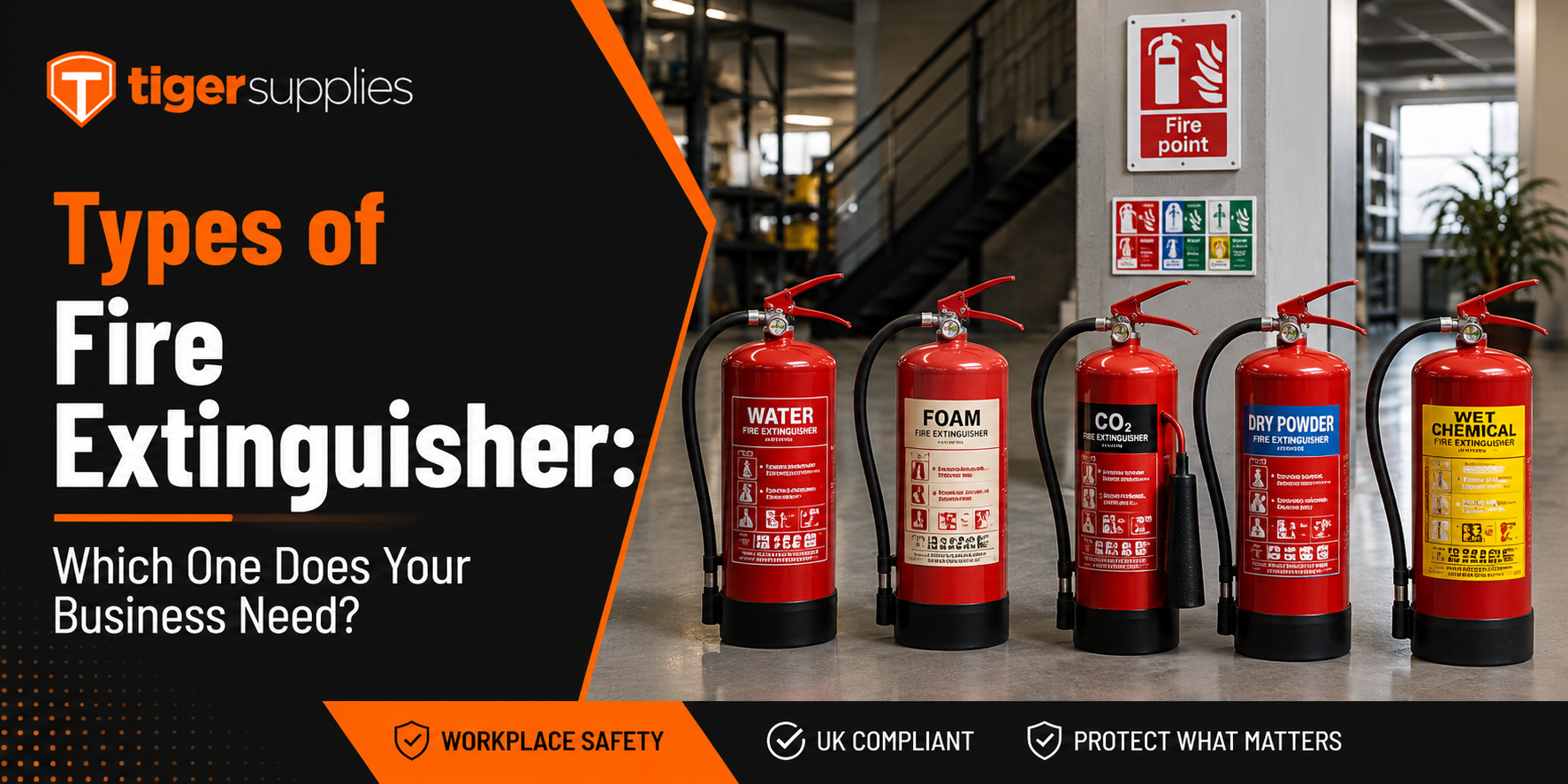
The most common fire extinguisher types used across UK workplaces are water, foam, CO2, dry powder and wet chemical extinguishers. Each type is designed for different fire risks, so the right choice depends on what materials, equipment and hazards are present on site.
Water Fire Extinguisher
A water fire extinguisher is mainly used for Class A fires involving solid materials such as paper, cardboard, wood and textiles. These are common risks in offices, schools, shops, stockrooms, warehouses and general workplace areas.
Water extinguishers work by cooling the burning material and reducing the heat of the fire. They are one of the most familiar extinguisher types, but they are not suitable for every situation.
Best used for:
- Paper
- Cardboard
- Wood
- Textiles
- General combustible materials
Common workplace locations:
- Offices
- Schools
- Retail spaces
- Storage rooms
- Warehouses with packaging materials
Do not use on:
- Electrical fires
- Flammable liquids
- Cooking oil or fat fires
- Flammable gases
Water extinguishers are useful for many general workplace areas, but they should not be placed where the main risk is electrical equipment, fuel, chemicals or cooking oil.
CO2 Fire Extinguisher
A CO2 fire extinguisher is commonly used for electrical fire risks. It is often placed near computers, printers, servers, electrical panels, machinery and other live electrical equipment.
CO2 extinguishers work by displacing oxygen around the fire. They do not leave residue, which makes them useful in offices, IT rooms and environments where equipment damage and clean-up need to be minimised.
Best used for:
- Electrical equipment
- Computers and printers
- Server rooms
- Electrical panels
- Some flammable liquid risks
Common workplace locations:
- Offices
- IT rooms
- Server rooms
- Workshops
- Commercial premises with electrical equipment
Do not use on:
Cooking oil fires
Deep-seated Class A fires
Confined areas without considering safety risks
In many workplaces, CO2 extinguishers are paired with water or foam extinguishers. This gives coverage for both electrical risks and general solid material risks.
Foam Fire Extinguisher
A foam fire extinguisher is commonly used for Class A and Class B fires. This means it can help with solid materials such as paper, cardboard and wood, as well as flammable liquids such as petrol, paint, oils and solvents.
Foam extinguishers work by forming a layer over the fire, helping to cool the material and reduce the chance of re-ignition. They are often used in commercial and industrial spaces where there is a mix of general combustible materials and flammable liquid risks.
Best used for:
- Paper and cardboard
- Wood
- Textiles
- Flammable liquids
- Paints, oils and solvents
Common workplace locations:
- Warehouses
- Workshops
- Garages
- Factories
- Storage areas with flammable liquids
Do not use on:
Cooking oil fires
Flammable gas fires
Electrical fires unless the extinguisher is specifically tested and marked as suitable
Foam extinguishers can be a practical choice for workplaces with mixed Class A and Class B risks, but the exact suitability should always be checked against the extinguisher rating and site risk assessment.
Dry Powder Fire Extinguisher
A dry powder fire extinguisher is a versatile extinguisher type that can be used on several fire classes, including Class A, Class B and Class C fires. It is often used in outdoor areas, vehicles, construction sites and industrial environments.
Dry powder extinguishers work by interrupting the chemical reaction of the fire. They can be useful where there are mixed risks, but they are not always ideal for indoor offices or enclosed spaces because powder discharge can reduce visibility and create mess.
Best used for:
- Solid materials
- Flammable liquids
- Flammable gases
- Outdoor fire risks
- Vehicle and site use
Common workplace locations:
- Construction sites
- Outdoor work areas
- Vehicles
- Industrial yards
- Areas with flammable gas risks
Points to consider:
Can cause reduced visibility during discharge
Can leave residue and require clean-up
May not be suitable for enclosed indoor areas unless the risk assessment supports it
Dry powder extinguishers are useful in the right environment, but they should not be treated as the default choice for every workplace.
Wet Chemical Fire Extinguisher
A wet chemical fire extinguisher is designed for Class F fires involving cooking oils and fats. These extinguishers are commonly used in commercial kitchens, cafes, canteens, restaurants, catering environments and food preparation areas.
Cooking oil fires can be extremely dangerous. A standard water extinguisher should not be used on burning oil or fat because it can spread the fire. Wet chemical extinguishers are designed to cool the fire and create a layer over the burning oil or fat.
Best used for:
- Cooking oil fires
- Fat fires
- Deep fat fryer risks
- Commercial kitchen fire risks
Common workplace locations:
- Commercial kitchens
- Restaurants
- Cafes
- Canteens
- Food production areas
Do not use as a general replacement for:
Electrical fire protection
Flammable gas fire protection
General industrial fire risks unless suitable for the specific risk
If your workplace has cooking oil or deep fat fryer risks, wet chemical extinguishers should be considered as part of the fire safety setup.
Fire Extinguisher Colours Explained
Fire extinguisher colours help people identify the extinguisher type quickly. Modern UK fire extinguishers usually have a red body with a coloured label or band showing what type of extinguisher it is.
|
Colour band |
Extinguisher type |
Common use |
Do not use on |
|
Red |
Water |
Class A fires: paper, wood, cardboard and textiles |
Electrical fires, flammable liquids, cooking oils |
|
Cream |
Foam |
Class A and B fires: solids and flammable liquids |
Cooking oils, gas fires, some electrical risks |
|
Black |
CO2 |
Electrical equipment and some flammable liquids |
Cooking oils and deep-seated solid material fires |
|
Blue |
Dry powder |
Class A, B and C fires; outdoor and vehicle use |
Confined spaces unless suitable and risk assessed |
|
Yellow |
Wet chemical |
Class F fires: cooking oils and fats |
General electrical or gas fire risks unless stated suitable |
Fire extinguisher colour codes are useful, but staff should still be trained to understand which extinguishers are suitable for each risk area. A colour band alone should not be the only thing people rely on during an emergency.
Which Fire Extinguisher Is Best For An Office?
Most offices have Class A risks such as paper, cardboard, furniture and textiles, as well as electrical risks from computers, printers, monitors, chargers and other equipment.
A typical office setup may include:
- Water or foam extinguishers for general materials
- CO2 extinguishers near electrical equipment
- Fire extinguisher signs so equipment is easy to identify
- Fire alarms and detectors for early warning
For wider workplace readiness, businesses may also need fire alarms, detectors and clear fire extinguisher signs to support emergency response.
Which Fire Extinguisher Is Best For a Warehouse?
Warehouses often have mixed risks. These may include cardboard packaging, pallets, stock, machinery, charging equipment, vehicles, flammable liquids or external yard areas.
A warehouse may need:
- Water or foam extinguishers for packaging and solid materials
- CO2 extinguishers near electrical equipment
- Dry powder extinguishers for outdoor areas or vehicle risks
- Foam extinguishers where flammable liquids are present
- Cabinets or covers to protect extinguishers in harsh environments
If extinguishers are stored outside or in exposed areas, fire extinguisher cabinets and covers can help keep equipment protected and accessible.
Which Fire Extinguisher Is Best For a Construction Site?
Construction sites can have changing fire risks as work progresses. Risks may include timber, packaging, temporary electrics, fuel, machinery, hot works, storage containers and site cabins.
A construction site may need:
- Water or foam extinguishers for Class A risks
- CO2 extinguishers near electrical equipment
- Dry powder extinguishers for outdoor and vehicle areas
- Suitable signs and protected extinguisher storage
- Regular checks to make sure extinguishers remain accessible
Because site risks change, extinguisher placement should be reviewed as the project develops.
Which Fire Extinguisher Is Best For a Commercial Kitchen?
Commercial kitchens need special attention because cooking oils and fats create Class F fire risks. A wet chemical fire extinguisher is commonly used where deep fat fryers or cooking oil risks are present.
A commercial kitchen may need:
- Wet chemical extinguishers for cooking oil and fat fires
- Fire blankets for small pan fire risks
- CO2 extinguishers for nearby electrical equipment, if suitable
- Clear fire safety signs
- Suitable fire alarms and detection equipment
Do not assume a standard water, foam or powder extinguisher is suitable for cooking oil fires. Using the wrong extinguisher can make the fire more dangerous.
Fire Extinguisher Buying Checklist For UK Businesses
Before buying fire extinguishers for your workplace, check:
- What fire risks are present in each area of the site?
- Which fire classes apply to those risks?
- Whether electrical equipment is present?
- Whether flammable liquids, gases or cooking oils are present?
- Where extinguishers need to be placed for quick access?
- Whether extinguishers need cabinets, covers or stands?
- Whether fire extinguisher signs are needed?
- Whether staff know where equipment is located?
- Whether the fire risk assessment is up to date
Fire extinguishers should be easy to see, easy to access and suitable for the risk nearby. They should also be supported by the right signage, alarms and maintenance checks.
Fire Extinguishers And Wider Fire Safety Equipment
Fire extinguishers are only one part of workplace fire safety. Many businesses also need alarms, detectors, signs, cabinets, covers, stands, fire blankets and other emergency response products.
Tiger Supplies offers first aid and fire equipment for UK businesses, including products for offices, warehouses, construction sites, industrial facilities, schools and commercial premises.
Conclusion
The right fire extinguisher depends on the fire risks in your workplace. Water extinguishers are suited to solid materials, CO2 extinguishers are useful around electrical equipment, foam extinguishers cover many Class A and Class B risks, dry powder extinguishers can support outdoor and mixed-risk environments, and wet chemical extinguishers are important for cooking oil and fat fires.
There is no single extinguisher type that is right for every fire. For businesses, the safest approach is to choose fire extinguishers based on a proper fire risk assessment and support them with suitable signs, alarms, storage and staff awareness. Browse Tiger Supplies’ range of fire extinguishers and wider first aid and fire equipment for UK workplaces.
FAQs
What are the main types of fire extinguisher?
The main types of fire extinguisher are water, foam, CO2, dry powder and wet chemical. Each type is designed for different fire risks, so the right option depends on the materials, equipment and hazards in your workplace.
What fire extinguisher do I need for electrical equipment?
CO2 fire extinguishers are commonly used near electrical equipment because they do not leave residue. They are often placed near computers, printers, servers, electrical panels and other live electrical equipment.
What colour is a CO2 fire extinguisher?
A CO2 fire extinguisher usually has a black colour band or label on a red extinguisher body. CO2 extinguishers are commonly used for electrical fire risks and some flammable liquid fires.
What colour is a water fire extinguisher?
A water fire extinguisher usually has a red colour band or label. It is mainly used for Class A fires involving solid materials such as paper, wood, cardboard and textiles.
Can one fire extinguisher be used on every type of fire?
No. There is no single fire extinguisher type that is suitable for every fire risk. Different fires need different extinguisher types, which is why workplaces often need a combination of extinguishers.