What Are Rigger Boots? Uses, Safety Ratings and Site Rules for UK Construction Businesses
Posted by Tiger Supplies on 14th Jun 2026
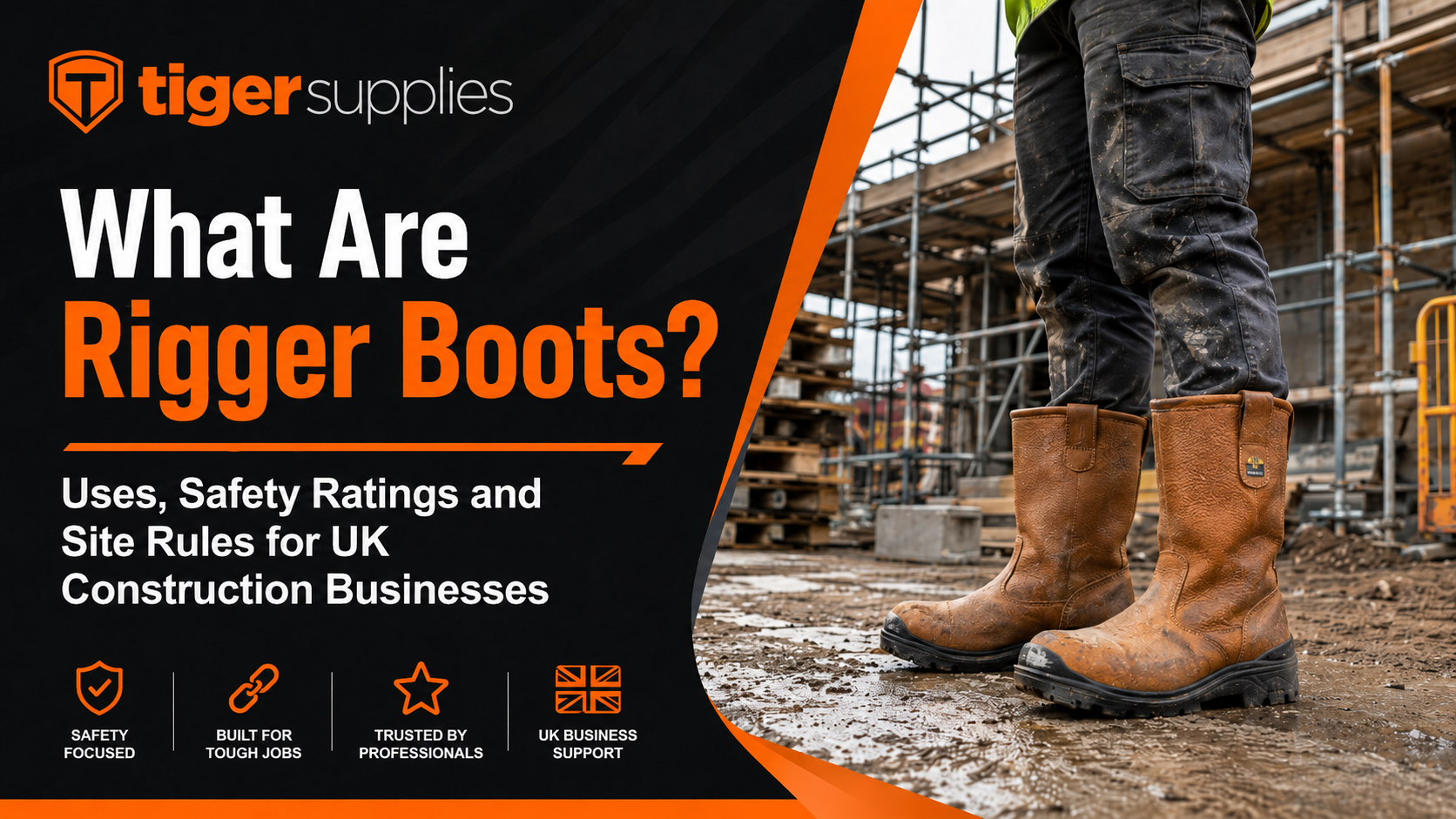
Rigger boots are pull-on safety boots originally designed for oil rig workers, the slip-on design meant they could remove their boots fast in a man-overboard emergency.
Today they're one of the most widely used types of safety footwear across UK construction, groundwork, utilities and agriculture.
If you're wondering whether rigger boots are waterproof, whether they're actually allowed on your site, or why some contractors ban them, this guide covers everything you need to know before ordering for your team.
What Are Rigger Boots Used For?
Rigger boots are used across industries where safety footwear is required but speed and practicality matter. Their pull-on design, no laces, no fiddling at the site gate, makes them a practical choice for:
- Construction and groundwork operatives moving between vehicles, plant and welfare areas
- Utilities workers in water, gas and telecoms
- Agricultural and rural workers in outdoor environments
- Warehousing and maintenance teams on hard-standing floors
The wide calf design also lets workers tuck in overalls, reducing trip and snagging risk during active site work.
What rigger boots are not designed for is precise ankle stabilisation. That distinction matters, and it's the root of most of the debate about where they can and can't be worn.
Are Rigger Boots Waterproof?
Not all rigger boots are waterproof. Whether yours are depends on the EN ISO 20345 safety rating on the boot:
- S1: steel toe cap, antistatic, fuel oil resistant. No waterproofing.
- S1P: everything in S1, plus a penetration-resistant midsole. Still not waterproof.
- S3: everything in S1P, plus a waterproof upper and cleated outsole. Fully water-resistant.
For wet ground, drainage projects or exposed outdoor work, you need an S3-rated boot. S1 and S1P are suited to drier indoor or hard-standing environments. The full ratings breakdown including S4, S5, cold insulation (CI) and heat-resistant outsole (HRO) is on our rigger boots page.
Are Rigger Boots Safe?
Yes, when matched correctly to the job. Any rigger boot certified to EN ISO 20345 meets the legal standard for safety footwear in the UK. That certification means:
- Steel toe cap tested to 200 joules of impact
- Compression resistance up to 15,000 newtons
- Antistatic properties (S1 and above)
- Slip-resistant outsole
Rigger boots are compliant PPE under the PPE at Work Regulations 1992, provided they carry EN ISO 20345 certification. The safety question isn't really about the boot itself, it's about whether that boot is the right choice for the specific environment and risk profile. Which brings us to the biggest question.
Are Rigger Boots Allowed on Site?
Under UK law, yes. The PPE at Work Regulations 1992 require employers to provide suitable protective footwear where there is a risk of foot injury, but the law specifies the standard the footwear must meet, not the style. A rigger boot carrying EN ISO 20345 certification is legally compliant safety footwear.
However, legally allowed and allowed on your specific site are two different things.
Many principal contractors set PPE requirements above the legal minimum. Some ban rigger boots entirely across all site areas. Others accept them for specific roles but not others. This is their right under site access conditions, and refusing to comply means refusing entry.
The answer to "are rigger boots allowed on site?" is: under UK law, yes. On your particular site check before you order.
Why Are Rigger Boots Banned on Some Construction Sites?
One reason: ankle support.
Rigger boots are a slip-on design. Unlike lace-up safety boots, they don't fasten tightly around the ankle, which means the foot has more lateral movement inside the boot. On uneven ground, loose rubble or when carrying heavy loads, that freedom of movement increases the risk of twisted or sprained ankles — and some principal contractors consider that risk unacceptable.
This is why large commercial construction sites, infrastructure and civils schemes often specify lace-up boots only. It's a contractor policy decision, not a statutory requirement. But it's enforceable.
Rigger boots are most commonly accepted on:
- Smaller residential and trade sites
- Groundwork and utilities projects with less uneven terrain
- Agricultural and rural environments
- Indoor industrial and warehousing roles
They're most often restricted on large civils, rail, highways and high-rise construction projects.
Can You Wear Rigger Boots on Site?
Before ordering footwear for any crew, take these steps:
- Request the site's PPE policy from the principal contractor or site manager before purchase
- Check the pre-start documentation or site induction pack, footwear requirements are always listed
- If ordering for a crew across multiple sites, confirm requirements for each site individually
If rigger boots are accepted, they're a practical, compliant choice for the environments listed above. If they're restricted, a lace-up dealer boot or work boot is the standard alternative, browse the full range in our protective footwear section, which covers every category of EN ISO 20345 certified footwear from safety trainers to dealer boots.
For businesses sourcing complete site PPE from one supplier, our PPE range covers gloves, hi-vis, hard hats and head protection alongside all protective footwear categories.
Frequently Asked Questions
What are rigger boots made of?
Most rigger boots use a full-grain leather or synthetic upper, a rubber or PU outsole and a steel toe cap insert. Fur-lined versions add thermal lining for cold weather site work. S3-rated boots include a waterproof membrane within the upper construction.
Are rigger boots the same as safety boots?
Rigger boots are a type of safety boot, specifically a pull-on style. The key difference from lace-up safety boots is the fastening, which affects ankle support. All rigger boots in our range are EN ISO 20345 certified and legally compliant as PPE.
Do rigger boots need EN ISO 20345 certification for UK site use?
Yes. Any footwear worn as PPE on a UK construction site must meet EN ISO 20345 as a minimum. Always check for the EN ISO 20345 marking on the boot or product listing before purchasing for site use, uncertified boots are not legally compliant.
Are rigger boots good for groundwork?
S3-rated rigger boots, waterproof upper, penetration-resistant midsole, SRC slip-resistant sole are well suited to groundwork. Practical to put on and take off, and the wide calf allows overalls to be tucked in. Always confirm the principal contractor's PPE policy before ordering for a specific groundwork project.
Where can I buy rigger boots for my team in the UK?
Tiger Supplies stocks EN ISO 20345 certified rigger boots in trade quantities, with no minimum order and free delivery on orders over £75. Trade accounts with invoice and credit terms are available for regular B2B orders.