What Should Be in a First Aid Kit at Work? UK Contents and Checklist
Posted by Tiger Supplies on 7th Nov 2026
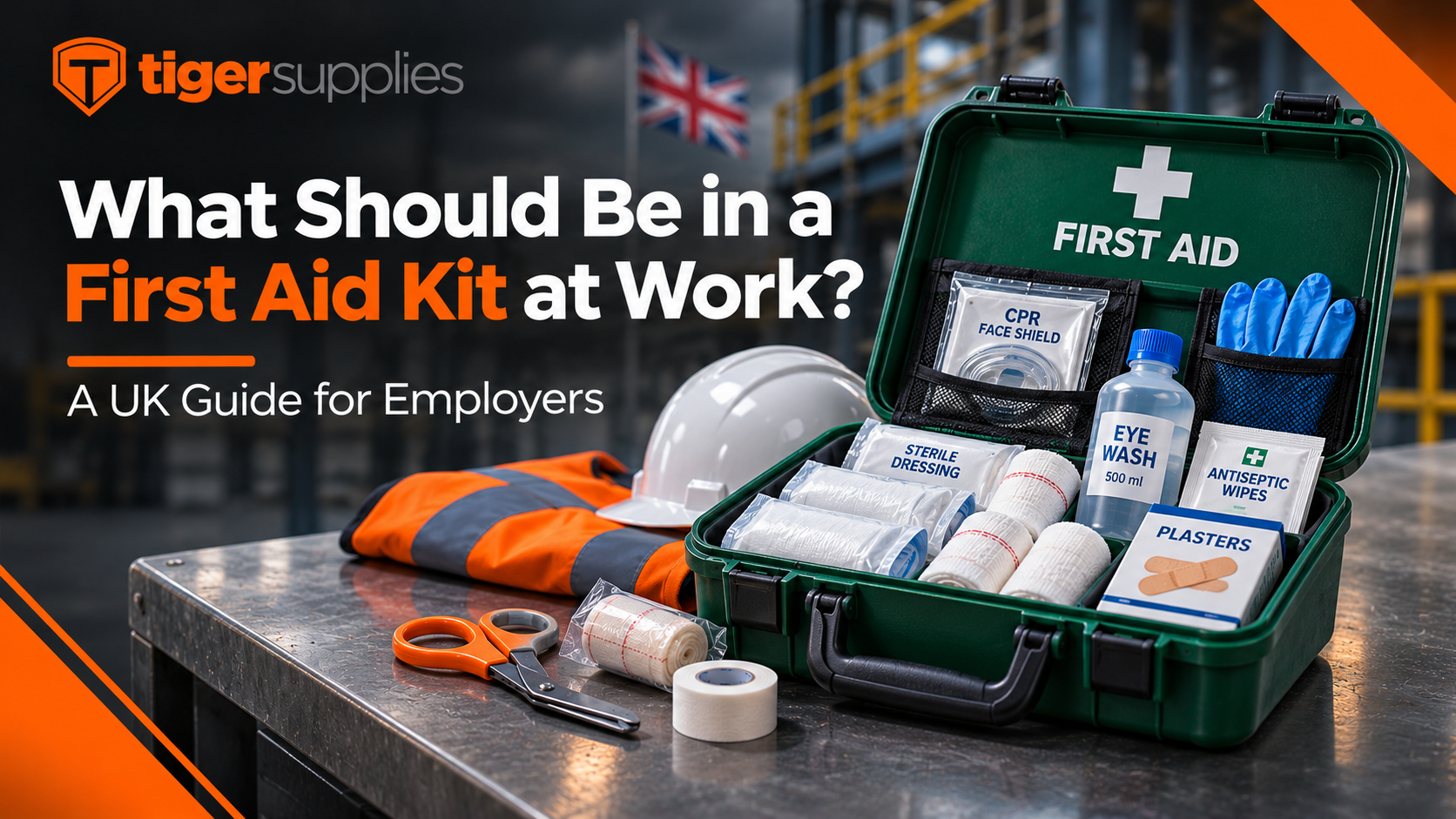
There’s no fixed list in law of what should be in a first aid kit at work. Your kit should contain whatever your first aid needs assessment identifies, and for low-risk work HSE suggests a basic minimum. A first aid kit at work is a stocked container of supplies for treating injuries or illness until medical help arrives, if it’s needed. This blog covers the legal requirements, how a needs assessment shapes your first aid kit contents, HSE’s suggested list, the BS 8599-1 standard, a checklist for keeping kits stocked, and answers to common questions.
First Aid Kit Requirements in the UK
Every employer must provide first aid equipment. Under regulation 3 of the Health and Safety (First-Aid) Regulations 1981, an employer must provide “such equipment and facilities as are adequate and appropriate in the circumstances” for first aid to be given to employees who are injured or become ill at work.
HSE first aid kit requirements set a simple minimum: a suitably stocked first aid kit, an appointed person to take charge of first aid arrangements, and information for all employees about those arrangements. There are no first aid kit regulations that list exact items, so HSE’s contents list is a suggestion rather than a legal requirement. The same applies to BS 8599-1: HSE confirms that following it is not a regulatory requirement under the 1981 Regulations.
First Aid Needs Assessment: What It Means for Your Kit
A first aid needs assessment, sometimes called a first aid risk assessment, decides what your kit should contain. HSE says its findings “should indicate the level of first-aid equipment, facilities and personnel required”. It should look at your workplace, your workforce, and the hazards and risks present.
In practice, the assessment shows where you need more than the basics. If chemical splashes or dust are a risk, alongside safety glasses, you’ll need eye washing supplies. HSE says that where mains tap water isn’t readily available, at least one litre of sterile water or sterile saline should be provided in sealed, disposable containers. Staff who travel regularly may need their own personal kit, which the needs assessment should decide. Workplaces with specific risks often add burns kits, eye wash kits or sharps containers.
HSE First Aid Kit Contents for Low-Risk Workplaces
For low-risk work such as desk-based jobs, HSE suggests a minimum first aid kit might contain:
- a leaflet with general guidance on first aid
- individually wrapped sterile plasters of assorted sizes
- sterile eye pads
- individually wrapped triangular bandages, preferably sterile
- safety pins
- large and medium-sized sterile, individually wrapped, unmedicated wound dressings
- disposable gloves
This is the HSE first aid kit contents list as it appears on HSE’s guidance page. HSE gives no quantities. Figures you’ll see quoted elsewhere, such as “20 plasters” or “6 safety pins”, don’t appear on HSE’s current page. Use this first aid kit contents list as a starting point and add anything your needs assessment identifies. You can top up individual items such as sterile dressings and plasters separately.
What Is BS 8599-1?
BS 8599-1 is the British Standard that sets out what should go into first aid kits used at work. It was published by BSI, the UK’s national standards body. BS 8599-1:2019 covers small, medium, large, travel and personal issue kits, plus critical injury packs. The current version, BS 8599-1:2019+A1:2026, was published on 30 April 2026. HSE recommends looking for BS 8599 when you buy a kit, but your kit doesn’t have to meet it by law.
The BS 8599 standard itself is sold by BSI. The quantities below are typical published first aid kit contents for BS 8599-1 kits, taken from the University of Warwick’s guidance and checked against a manufacturer’s published guide. The table works as a small first aid kit contents list and a medium first aid kit contents list as well as a large one. It shows only the items where both sources give the same figures, so check your own kit’s contents list for the rest.
|
Item |
Small |
Medium |
Large |
|
First aid guidance leaflet |
1 |
1 |
1 |
|
Washproof plasters, assorted |
40 |
60 |
100 |
|
Sterile eye pads |
2 |
3 |
4 |
|
Triangular bandages |
2 |
3 |
4 |
|
Finger dressings |
2 |
3 |
4 |
|
Conforming bandages |
1 |
2 |
2 |
|
Burn dressings |
1 |
2 |
2 |
|
Sterile cleansing wipes |
20 |
30 |
40 |
|
Nitrile gloves (pairs) |
6 |
9 |
12 |
|
Resuscitation face shields |
1 |
1 |
2 |
|
Foil blankets |
1 |
2 |
3 |
|
Clothing shears |
1 |
1 |
1 |
First Aid Kit Checklist
Use this first aid kit checklist for every first aid kit inspection and after the kit has been used:
- every item on the kit’s contents list is present, in the right quantity
- nothing has passed its printed expiry date; replace expired items and dispose of them safely
- sterile items are still sealed in undamaged packaging
- for sterile items with no expiry date, check with the manufacturer how long they can be kept; check non-sterile items without dates are still fit for purpose
- there are no tablets or medicines in the kit
- the kit is easy to reach and its location is known to everyone
Restock soon after any use. If you keep this as a first aid box contents checklist on paper, record the date and who checked it. Keep first aid kit refills in stock so you can restock straight away.
Need First Aid Kits for Your Workplace?
If you’re setting up or replacing kits, Tiger Supplies stocks first aid kits for offices, sites and vehicles, with free delivery on orders over £75 and next working day delivery.
Conclusion
The law doesn’t set a fixed list of what should be in a first aid kit at work. Employers must provide adequate and appropriate equipment, and the first aid needs assessment decides what that means for each workplace. For low-risk work, HSE’s suggested list covers the basics: plasters, dressings, eye pads, bandages, safety pins, gloves and a guidance leaflet. BS 8599-1 sets out fuller contents by kit size, and its 2026 update now covers defibrillators too. Whichever kit you choose, check it frequently, replace expired items, restock after every use, and keep tablets and medicines out of it.
Frequently Asked Questions
How often should first aid kits be checked?
HSE sets no fixed timetable. It says kits should be “checked frequently and restocked soon after any use”, and items should be replaced by their printed expiry dates. How often a first aid kit should be checked depends on how much it’s used. A busy site kit needs checking far more often than one in a small office.
What changed in BS 8599-1 in 2026?
BSI published BS 8599-1:2019+A1:2026 on 30 April 2026. Its scope now goes beyond kit contents to cover the provision and placement of automated external defibrillators (AEDs), which makes a workplace defibrillator part of the standard. If you’re reviewing your first aid provision, include defibrillators in your needs assessment.
What should not be in a first aid kit at work?
Tablets and medicines. HSE recommends that you don’t keep them in a first aid box, and that includes common painkillers, so leave paracetamol out of first aid kits at work. Employees who need their own medication should keep it themselves.
What are the 10 essential items in a first aid kit?
There’s no official list of 10. Drawing on HSE’s suggested contents and typical BS 8599-1 kits, ten core items are:
- plasters
- sterile wound dressings
- sterile eye pads
- triangular bandages
- safety pins
- disposable gloves
- a first aid guidance leaflet
- cleansing wipes
- a foil blanket
- a resuscitation face shield
Do first aid kits expire?
The kit itself doesn’t, but many of the items inside do, especially sterile ones, which are marked with expiry dates. Replace expired items and dispose of them safely. For sterile items with no expiry date, check with the manufacturer how long they can be kept.
Is a defibrillator a legal requirement?
No. HSE confirms the law doesn’t require workplaces to have an AED. If you do provide one, the Provision and Use of Work Equipment Regulations apply, and you should give staff information and written instructions, such as the manufacturer’s.
Who is responsible for the first aid kit?
The employer is legally responsible for providing adequate first aid equipment. Day to day, HSE says an appointed person should take charge of first aid arrangements, so it makes sense to give that person responsibility for checking and restocking the kit.