EN 374 Gloves Explained: Chemical Protection, Types A, B & C and How to Choose the Right Safety Gloves
Posted by Tiger Supplies on 14th May 2026
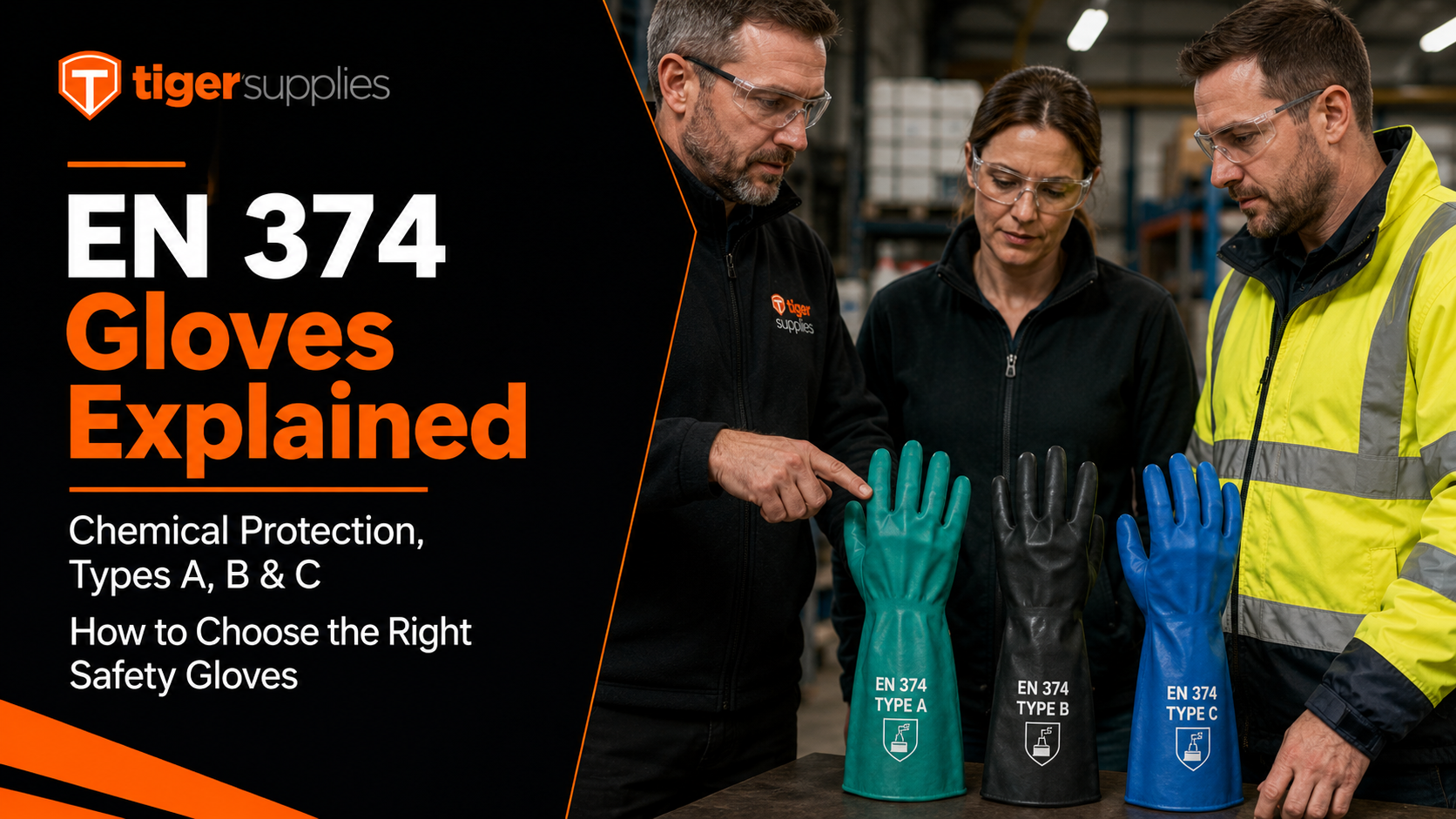
Chemical handling requires more than choosing any glove labelled “protective”.
This guide explains what EN 374 gloves mean, how Type A, B and C chemical protection works, and what UK businesses should check when selecting suitable safety gloves for the task.
What Are EN 374 Gloves?
EN 374 gloves are protective gloves tested for resistance against dangerous chemicals and, where relevant, micro-organisms. The standard helps buyers understand whether a glove has been assessed for chemical protection, what type of testing it has passed, and how suitable it may be for different workplace risks.
For businesses handling cleaning chemicals, industrial fluids, laboratory substances or other hazardous materials, choosing the right glove is not just about thickness or material. It is about checking whether the glove has been tested to the correct chemical protection standard and whether its performance matches the actual risk.
This is where BS EN 374 gloves matter.
The standard gives a structured way to compare chemical protective gloves, including classification by Type A, Type B and Type C, specific test chemicals, resistance to penetration and, separately, protection against micro-organisms.
For businesses reviewing hand protection options, Tiger Supplies’ safety gloves and gauntlets range can help you explore glove categories alongside wider PPE requirements.
EN 374 Gloves: Quick Summary
|
Term |
What it means |
|
EN 374 gloves |
Gloves tested for chemical and/or micro-organism protection |
|
EN 374-1 gloves |
Chemical risk terminology, performance requirements and classification |
|
EN 374-2 gloves |
Resistance to penetration, meaning whether a liquid or gas can pass through defects in the glove |
|
EN 374-5 |
Protection against micro-organisms such as bacteria, fungi and, where specifically tested, viruses |
|
Type A, B and C |
Chemical glove categories based on permeation performance against selected test chemicals |
In simple terms: EN 374 tells you that the glove has been assessed for chemical-related risks, but you still need to check the exact Type, chemical letter codes and intended use before choosing it.
EN 374-1, EN 374-2 and EN 374-5: What’s the Difference?
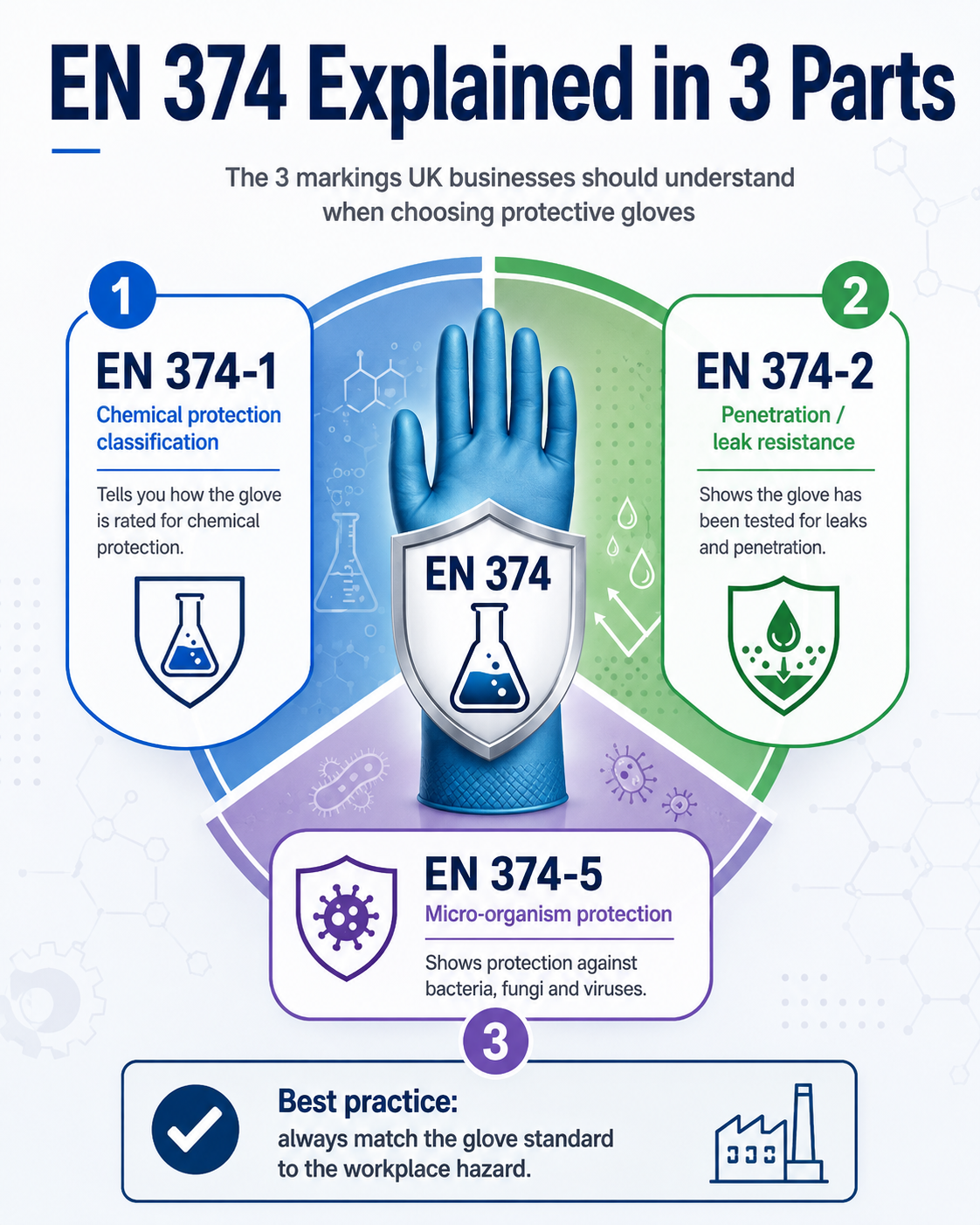
People often search for EN 374-1 gloves, EN 374-2 gloves and EN 374-5 separately because each part of the standard deals with a different protection question.
EN 374-1 gloves
EN 374-1 gloves are assessed for chemical risks. This is the part of the standard that defines the familiar Type A, Type B and Type C categories and uses the EN 374 chemical letter codes shown under the glove pictogram.
EN 374-2 gloves
EN 374-2 gloves are tested for resistance to penetration. In practical terms, this checks whether chemicals or micro-organisms could pass through non-molecular defects such as pinholes or faults in the glove material.
EN 374-5
EN 374-5 relates to gloves intended to protect against micro-organisms. A glove carrying this marking may be tested for protection against bacteria and fungi. Virus protection requires an additional viral penetration test and should not be assumed unless the appropriate marking is present.
EN 374 Type A, Type B and Type C Gloves Explained
One of the most important parts of the standard is understanding the difference between EN 374 Type A gloves, Type B gloves and Type C gloves.
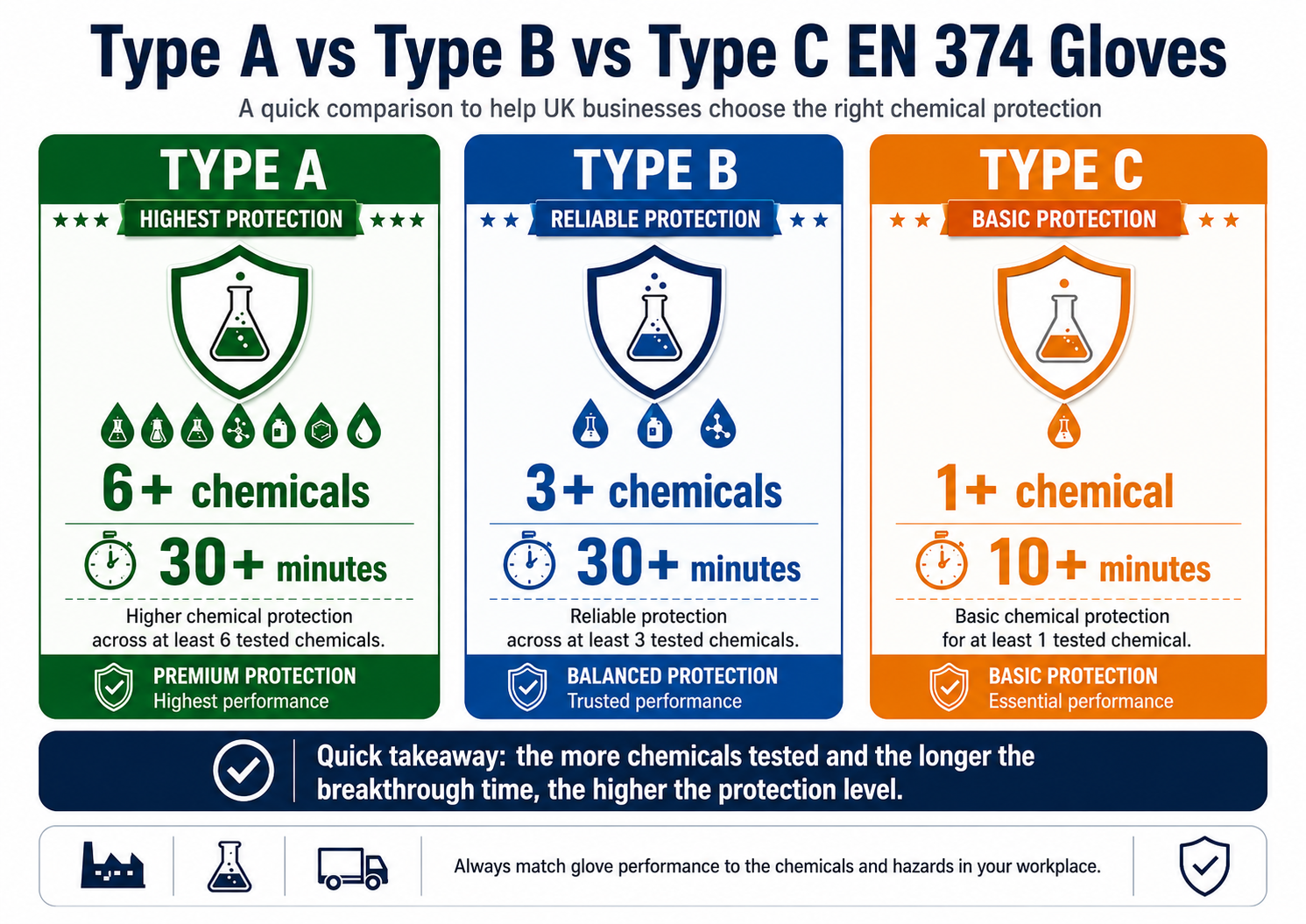
These types do not simply mean “good, better, best.” They show how many listed test chemicals the glove achieved the required permeation performance against.
What is Type A EN 374?
Type A EN 374 gloves have been tested to achieve a permeation performance of at least 30 minutes against a minimum of six chemicals from the EN 374 chemical list.
What about Type B and Type C?
- Type B gloves meet the same 30-minute permeation threshold, but for at least three chemicals.
- Type C gloves are tested against at least one chemical with a minimum permeation performance of 10 minutes.
This is why buyers should not judge a glove by the Type letter alone. A Type B glove may still be exactly right for a task if it has been tested against the specific chemical being used.
EN 374 Chemical List: What Do the Letter Codes Mean?
A major part of understanding chemical resistant gloves EN 374 is reading the letter codes shown beneath the glove pictogram.
The EN 374 chemical list contains 18 reference chemicals, each represented by a letter. Manufacturers use these codes to show which chemicals a glove has been tested against. This is also why people often search for the EN ISO 374-1 chemical list when trying to understand glove markings.
|
Code |
Chemical |
|
A |
Methanol |
|
B |
Acetone |
|
C |
Acetonitrile |
|
D |
Dichloromethane |
|
E |
Carbon disulphide |
|
F |
Toluene |
|
G |
Diethylamine |
|
H |
Tetrahydrofuran |
|
I |
Ethyl acetate |
|
J |
n-Heptane |
|
K |
Sodium hydroxide 40% |
|
L |
Sulphuric acid 96% |
|
M |
Nitric acid 65% |
|
N |
Acetic acid 99% |
|
O |
Ammonium hydroxide 25% |
|
P |
Hydrogen peroxide 30% |
|
S |
Hydrofluoric acid 40% |
|
T |
Formaldehyde 37% |
If a glove is marked, for example, Type A AJKL, it means the glove has been tested to the required Type A standard and achieved the necessary permeation performance against the chemicals represented by A, J, K and L, among others.
The key point is simple:
Do not assume a glove protects against every chemical just because it is EN 374 marked. Always check the letter codes and product documentation for the substances relevant to your work.
What Does EN 374-3 Mean?
Search interest around EN 374-3 gloves still exists because older technical documents and product references often mention EN 374-3 in relation to chemical permeation testing.
In practical terms, this is the testing area concerned with how quickly a chemical passes through the glove material at a molecular level. In the updated standards framework, chemical permeation testing is associated with newer test-method references, so buyers should rely on the current glove datasheet, marking and manufacturer information rather than judging protection from “EN 374-3” wording alone.
The useful takeaway is:
If you are comparing chemical gloves, focus on the current EN 374 marking, Type A/B/C classification, chemical letter codes and product performance data.
What Does EN 374-5 Mean for Micro-Organism Protection?
EN 374-5 is used for gloves intended to protect against micro-organism risks. This includes protection against bacteria and fungi, subject to the standard’s requirements.
If a glove has also passed the relevant viral penetration testing, it may carry additional marking to indicate virus protection. However, buyers should not assume that every EN 374-5 glove automatically provides virus protection. The product marking and datasheet need to be checked carefully.
This is especially important in healthcare, laboratory, cleaning and contamination-sensitive environments where the exact type of biological protection matters.
How to Choose the Right EN 374 Gloves for Chemical Handling
Understanding the standard is useful, but the real decision is still practical: which glove is right for the job?
When selecting EN 374 gloves or comparing chemical resistant gloves EN 374, use this five-step checklist.
1. Identify the exact chemical or substance
Start with what the glove needs to protect against. Do not choose solely by brand, material or general “chemical resistant” wording.
2. Check the EN 374 chemical letter codes
Match the relevant chemical against the EN 374 chemical list and check whether the glove has been tested against that chemical.
3. Review whether Type A, B or C is appropriate
A Type A glove has broader tested chemical resistance, but a Type B or Type C glove may still suit a specific task if it has the right test coverage for the chemical being handled.
4. Consider exposure time and task conditions
Chemical splash risk, prolonged contact, immersion, cleaning tasks and industrial handling all place different demands on gloves. The Health and Safety Executive advises considering the substance used, the task, likely exposure time, other hazards and wearer comfort when choosing chemical protective gloves.
5. Check whether you also need mechanical protection
Chemical protection is not the same as cut, abrasion or tear resistance. If the work also involves handling sharp, rough or abrasive materials, the glove may need suitable mechanical performance too.
For broader glove selection, explore Tiger Supplies’ chemical and workplace safety gloves range. If the task also involves mechanical hazards, our guide to EN388 glove ratings explains how safety gloves are assessed for abrasion, cut, tear and puncture resistance.
Conclusion
EN 374 markings are there to make glove selection more informed, but the right choice still depends on the chemical risk, the type of contact involved and the wider demands of the task. Understanding Type A, B and C classifications, chemical letter codes and micro-organism protection helps UK businesses choose hand protection more carefully rather than relying on general “chemical-resistant” claims alone.
As part of a wider PPE approach, selecting the right gloves can support safer, more practical workplace protection. Tiger Supplies helps businesses explore suitable glove and PPE options with clearer product choices for everyday site, trade and industrial needs.
EN 374 Gloves FAQs
What is the EN 374 standard for gloves?
EN 374 is the standard used to assess protective gloves intended for chemical risks and, through related parts of the standard, micro-organism risks. It covers glove classification, chemical testing, resistance to penetration and related marking requirements.
What is Type A EN 374?
Type A EN 374 gloves achieve the required permeation performance against at least six chemicals from the EN 374 chemical list, with a minimum performance of 30 minutes for each listed chemical.
What is the difference between EN 374-1 and EN 374-2?
EN 374-1 covers chemical risk terminology, performance requirements and glove classification. EN 374-2 covers resistance to penetration, meaning how the glove material resists leaks or defects that could allow substances to pass through.
What does EN 374-5 mean?
EN 374-5 relates to protection against micro-organisms. It covers gloves intended to protect against bacteria and fungi, with virus protection requiring specific additional testing and marking.
What chemicals are included in the EN 374 chemical list?
The EN 374 chemical list includes 18 reference chemicals such as methanol, acetone, acetonitrile, dichloromethane, toluene, sulphuric acid, nitric acid, hydrogen peroxide and formaldehyde. Each chemical is represented by a letter code used in glove markings.
Are EN 374 gloves the same as chemical-resistant gloves?
Not exactly. EN 374 gloves are a type of chemical protective glove assessed against a recognised standard, but protection depends on the exact testing, Type A/B/C classification, chemical letter codes and glove datasheet. A glove should only be chosen when its tested performance matches the chemical risk involved.