How to Cover a Smoke Alarm Safely During Building Work
Posted by Tiger Supplies on 14th Oct 2026
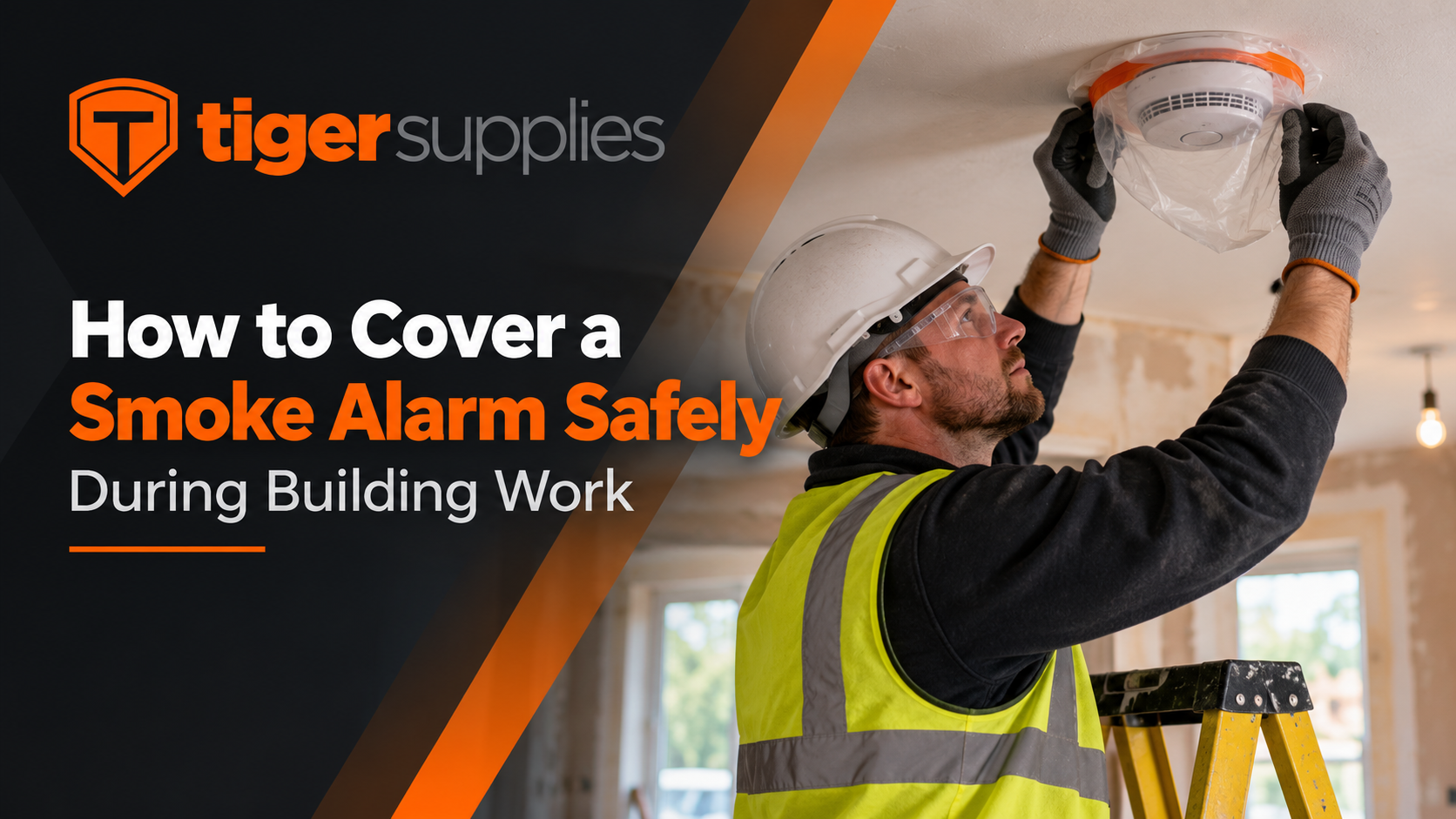
Covering a smoke alarm during building or decorating work can stop dust and paint from setting it off. It only works if the cover comes off once the work in that area is finished and the alarm has been tested. A detector left covered after the job is over leaves the building without fire detection.
This guide is for site managers, contractors, facilities managers and landlords who need to keep work moving without disabling fire detection. It explains when covering is acceptable, what the law expects, and how to cover a smoke detector properly and remove the cover afterwards.
Why False Alarms During Works Cost More Than Time
Every false alarm on site means an evacuation, a call-out and often a stopped programme while someone investigates. After a few of these, teams start to see the detector as the problem. The usual response is to disable the alarm or remove its battery, and that is when the building loses its early warning.
Covering a smoke alarm is meant to prevent this. The dust and paint that trigger false alarms are kept out of the sensing chamber, so the detector stays in place and the work carries on. It only solves the problem when it is done for the right reasons and for the right length of time, which the rest of this guide covers.
When Covering a Smoke Alarm Is Acceptable
Covering is a short-term measure for active dust or paint work in one area. It is not a way to switch a detector off for the rest of the project. Before you cover a smoke detector, check the room against this table.
|
Situation |
Cover the detector? |
Notes |
|
Sanding, plastering or painting in an unoccupied room |
Yes, for the duration of the work |
Remove the cover when work in that room finishes |
|
Occupied rooms, kitchens or bathrooms |
No |
Keep the detector live |
|
Rented, hotel or dorm rooms |
No, unless the landlord or manager approves in writing |
Covered alarms in occupied accommodation are a serious risk |
If an alarm goes off because of cooking or steam, do not cover it to stop the noise. Section 7 explains what to do instead.
Is Covering a Smoke Detector Illegal in the UK?
No single law makes covering a smoke detector illegal in itself. The problem is what a covered detector does: it stops working, and the people responsible for fire safety are expected to keep detection working.
In non-domestic premises in England and Wales, the Regulatory Reform (Fire Safety) Order 2005 requires the responsible person to make sure fire detection and alarm systems are maintained and working. A detector left covered after the works, or covered for months, can breach those duties. Fire detection in non-domestic buildings is also covered by BS 5839-1, the code of practice for designing, installing and maintaining fire detection and alarm systems. For the basics of the standard and how it applies to your premises, see our UK business guide to fire alarm systems.
What Are the UK Building Regulations Regarding Smoke Alarms?
Building Regulations set the requirements for fitting smoke alarms in new and altered buildings. In England, these are set out in Approved Document B. Once a building is in use, the Fire Safety Order sets the duties for keeping detection working.
In private rented homes in England, the Smoke and Carbon Monoxide Alarm (England) Regulations 2015 require landlords to have working smoke alarms on each storey and a carbon monoxide alarm where there is a fixed combustion appliance. These rules apply to residential lets rather than most workplaces, so for business premises the Fire Safety Order and BS 5839-1 are the reference points.
In practice, any cover must come off when the work finishes, and the detector must be tested before the room is handed back.
How to Cover a Smoke Alarm Safely
Before you cover a detector, check the room against the table in the section above. If the room qualifies, follow these steps:
- Use a purpose-made dust cover that fits your detector model. Check the manufacturer’s guidance for compatibility.
- Place the cover fully over the detector head so no dust or paint can reach the sensing chamber.
- Check the cover is secure and cannot shift.
- Keep another working detector in the building available while one is covered.
- Record the detector in the site register before work starts (see the checklist below).
What can I use to cover a smoke alarm?
Use only a purpose-made smoke sensor cover or smoke alarm cover designed for your detector, as a smoke alarm dust cover. Plastic bags, tape, cloth and foil are not suitable. They can fall off, leave residue or block the detector.
How to Take a Smoke Alarm Cover Off and Check It Works
Knowing how to remove the cover of a smoke alarm is only half the job. Checking that it works is what makes the room safe again.
Remove the cover as soon as work in that room finishes, not at the end of the project. Then:
- Remove the cover and check no residue is left on the detector.
- Clean the outside of the detector if dust has settled, using the method the manufacturer recommends.
- Press the test button and confirm the indicator lights and the sounder operates.
- Mark the detector as back in service in the site register.
Covering Heat Detectors and Combination Smoke and CO Alarms
Heat detectors can be covered during work under the same rules as smoke detectors: only for active work in unoccupied areas, and removed afterwards. Fire alarm covers and fire detector covers should be fitted the same way.
Combination smoke and carbon monoxide alarms are different. Check the manufacturer’s guidance before covering one. If it does not say covering is allowed, leave the detector uncovered and protect the area from dust instead, for example by sealing the room off.
Site Checklist for Covering a Smoke Alarm
Covers are only as safe as the process behind them. Use this checklist to make sure every detector covered on site is tracked, tested and returned to service.
- Name one person to fit covers and one person to remove them.
- Keep a site register of every covered detector, showing its location, the date it was covered, who covered it and the expected removal date.
- Do a handover check: every register entry must be signed off as removed and tested before the site is returned.
- For labels, signage and other site accessories, see fire safety accessories for site teams.
- If the site will need more detectors than it already has, plan ahead by checking wireless fire alarm and detector options before work start.
Conclusion
Covering a smoke alarm is a short-term measure for active works in unoccupied areas, and it only protects a building when it is managed properly. Cover the detector when the work starts, keep the site register up to date, remove the cover as soon as the work in that room finishes, and test the alarm before the room is handed back.
Fire safety on site depends on the whole process, not just the cover. For more on the wider picture, read our types of fire extinguisher explained guide, and check fire extinguishers for construction sites when planning your kit.
Frequently Asked Questions
Is covering a smoke detector illegal in the UK?
Covering a detector is not illegal in itself, but leaving it covered after works can breach fire safety duties. See the legal section above.
What can I use to cover a smoke alarm?
Only a purpose-made cover that fits your detector model. See the section above.
Can I cover my smoke detector?
Only for active dust or paint work in an unoccupied area, and only until the work finishes.
What are the UK building regulations regarding smoke alarms?
Approved Document B sets the requirements for new and altered buildings in England. The Fire Safety Order sets the duties for keeping detection working once a building is in use.
How to cover a smoke detector in a hotel?
Do not cover it unless the hotel manager approves in writing. A covered alarm in an occupied room is a serious risk.
How to cover the smoke detector in the dorm?
Ask the accommodation manager first. Do not cover the detector without written approval.
Smoke detector covers for construction?
Purpose-made elasticated dust covers are designed for construction work and fit smoke and heat detector heads. Browse purpose-made dust covers for construction.
Smoke detector dust covers?
Yes. Purpose-made elasticated covers are available in packs of five. See above for how to fit them.
How to cover smoke detector light?
Cover the whole detector head during work, not just the indicator light. The light is an indicator and does not protect the sensor. Remove the cover afterwards as described in the removal section above.