PPE Regulations UK: UKCA, CE Marking and What Businesses Should Check Before Buying PPE
Posted by Tiger Supplies on 1st Jun 2026
For UK businesses, buying PPE is not just a product choice.
The right safety gloves, hard hats, hi-vis clothing, eye protection, hearing protection or respiratory protective equipment should be suitable for the task, the wearer and the workplace risk.
Searches around PPE regulations UK usually come down to one practical question, ‘’What should a buyer check before placing an order?’’
This guide explains the key checks UK businesses should make when buying PPE, including product marking, conformity documentation and relevant safety standards. It is not legal advice, but a practical starting point for procurement teams, site managers and safety leads who need to order PPE responsibly.
What PPE Regulations Mean for UK Businesses
Personal Protective Equipment, short for PPE, is normally used after workplace risks have been assessed and other control measures are not enough on their own. If a risk assessment shows PPE is needed, employers must provide suitable PPE free of charge. The HSE guidance on PPE at work explains the employer’s role in providing and using PPE correctly.
For buyers, this means PPE should not be chosen by price, brand or availability alone. It should match the hazard, fit the wearer, work with other PPE being worn and come with the right product information.
For example, gloves selected for chemical handling are different from cut protection gloves. Buyers reviewing Gloves & Gauntlets should check whether the glove type and standard match the task. A hard hat used with ear defenders must still allow both items to be worn correctly. Hi Vis clothing needs to suit the work environment, lighting conditions and visibility risk.
Good PPE buying therefore has two sides:
- Workplace Suitability: is this the right PPE for the task, risk and wearer?
- Product Conformity: has this PPE followed the correct marking and documentation route before being placed on the market?
UKCA and CE Marking for PPE Explained
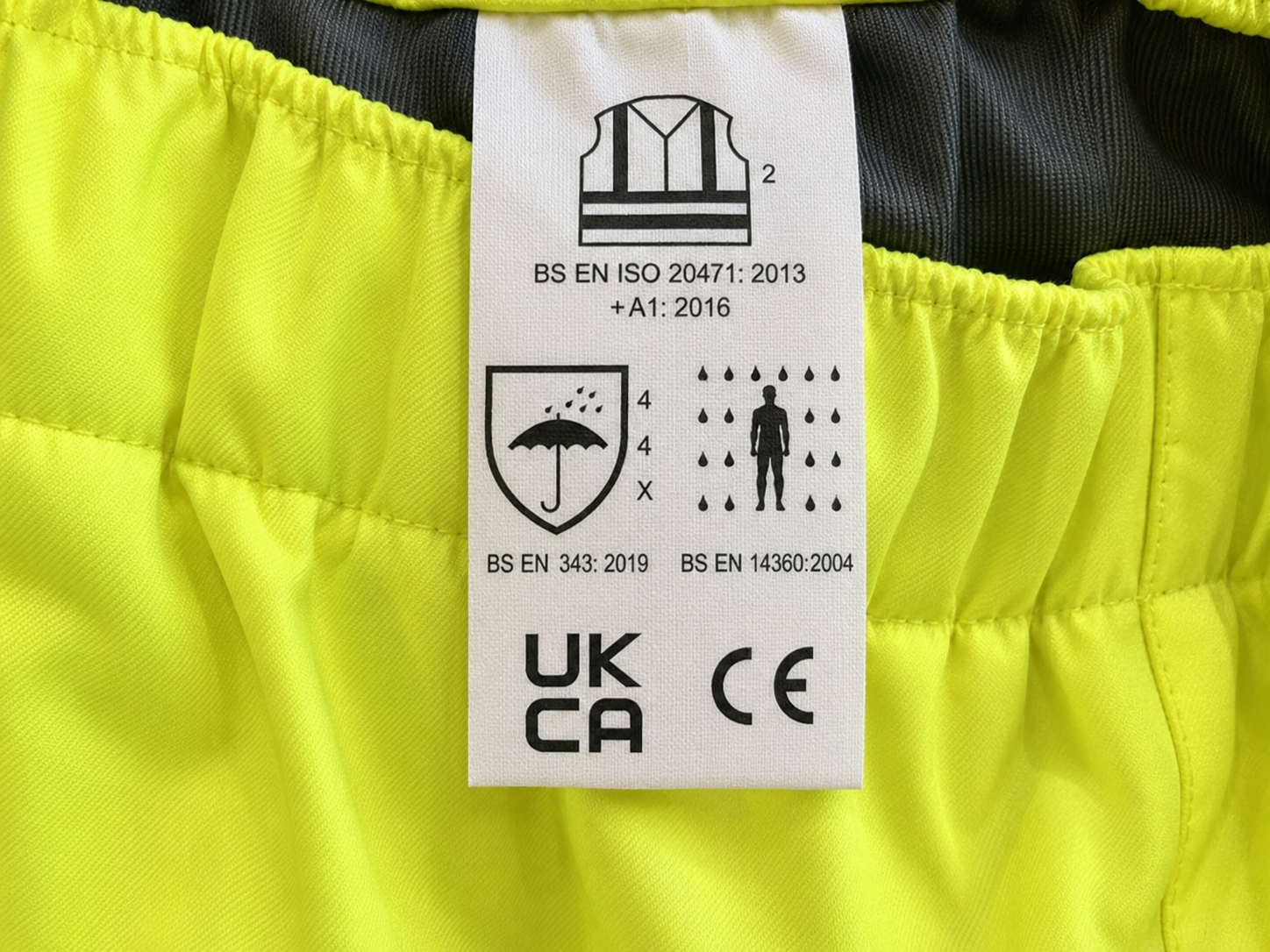
For most new PPE placed on the Great Britain market, buyers should expect to see either UKCA or CE marking, supported by a declaration of conformity and instructions in English.
A conformity mark is not a performance rating by itself. It shows that the manufacturer has followed the relevant conformity assessment route for the product.
This is where confusion happens.
UKCA PPE and CE marked PPE are not separate product types. They are marking regimes used to indicate conformity with relevant product requirements.
UKCA marking for PPE is one conformity route, but CE marking is also recognised for PPE placed on the Great Britain market where the relevant requirements are met.
For PPE, current Great Britain (GB) guidance recognises CE marking and allows businesses to use UKCA or CE marking when placing PPE on the GB market. The GOV.UK guidance on UKCA and CE marked products gives the latest government position on product marking for Great Britain.
For product marking, the framework includes Regulation 2016/425 as it applies in Great Britain and the Personal Protective Equipment Enforcement Regulations 2018.
For procurement teams, the practical question is not simply “does this product have a logo?” It is:
- Does the PPE have the correct mark for the market?
- Is there a declaration of conformity?
- Are instructions supplied in English?
- Is the relevant PPE standard clear for the risk, such as EN388 for mechanical protective gloves, EN374 for chemical protective gloves, EN397 for safety helmets or EN ISO 20471 for high-visibility clothing?
Is UKCA Still Required for PPE in Great Britain?
No. UKCA is not the only accepted marking for PPE placed on the Great Britain market. PPE may also be correctly CE marked where the relevant requirements are met.
The UK government currently allows either UKCA or CE marking for PPE placed on the Great Britain market. As a result, buyers may see UKCA marked PPE, CE marked PPE or products carrying both marks.
If you are buying PPE for a UK workplace, the key checks are:
- The product has either a UKCA or CE mark.
- It is suitable for the specific workplace risk.
- It comes with instructions in English.
- A declaration of conformity is available.
A product without UKCA marking is not automatically non-compliant if it is correctly CE marked for the GB market.
What Buyers Should Check Before Ordering PPE
A good PPE buying process should be simple. Before ordering, check the risk, the product mark, the product standard, the documentation and the fit.
For PPE compliance UK searches, the practical checks are usually the same: risk, conformity mark, declaration of conformity, English instructions, relevant standard and fit.
1. Match The PPE To The Risk
Before buying any PPE, think about the job being done. What hazards are workers exposed to? Common risks include cuts, chemicals, heat, cold, falling objects, dust, fumes, noise, poor visibility and working at height. The key point is simple - Choose PPE based on the hazard, not just the product type or price.
2. Check The Conformity Mark
Look for an appropriate conformity mark, normally UKCA or CE marking for PPE placed on the GB market. A CE mark on PPE or UKCA mark does not tell you which hazard the product protects against, but it is an important product conformity check.
3. Check The Declaration Of Conformity
A PPE declaration of conformity is a document provided by the manufacturer to confirm that the product meets the relevant requirements.
You do not need to be a compliance expert, but it is good practice to make sure this document is available, especially when buying PPE from a new supplier or placing larger orders.
4. Check The Relevant PPE Standard
PPE standards UK help buyers understand what a product has been tested for. Different standards apply to different types of protection.
Some common examples include:
- EN388 for protective gloves against mechanical risks such as cuts, abrasion, tears and punctures. Learn more in our guide to EN388 glove ratings.
- EN374 for gloves designed to protect against chemicals and microorganisms. Read our guide to EN374 chemical protection gloves.
- EN397 for industrial safety helmets. Learn more about EN397 hard hats.
- EN ISO 20471 for high-visibility clothing. Read our guide to EN ISO 20471 hi-vis clothing.
Always make sure the standard matches the risk. For example, bright clothing is not automatically suitable hi-vis clothing, and strong-looking gloves are not necessarily suitable for chemical handling.
5. Check Fit, Comfort & Compatibility
Even the best PPE may not provide proper protection if it does not fit correctly.
Check that the PPE is available in the right size, is comfortable to wear and allows workers to carry out their tasks safely. Also make sure different items work well together. For example, safety eyewear, masks, ear defenders and helmets often need to be worn at the same time without affecting each other's performance.
FAQs
What is UKCA marked PPE?
UKCA marked PPE is PPE that carries the UK Conformity Assessed mark. It shows the manufacturer has followed the relevant UK conformity route for the product.
What is UKCA in the UK?
UKCA means UK Conformity Assessed. It is a product marking used for certain goods placed on the Great Britain market, including some PPE.
Is PPE a legal requirement in the UK?
PPE can be a legal requirement where a risk assessment shows it is needed to protect workers from health and safety risks that remain after other controls.
Is UKCA still required?
For PPE placed on the Great Britain market, current guidance allows either UKCA or CE marking where the relevant requirements are met. Always check the latest GOV.UK guidance.
Does PPE have to be CE marked?
Most new PPE placed on the GB market must be UKCA or CE marked, with a declaration of conformity and instructions in English.
What is a PPE declaration of conformity?
A PPE declaration of conformity is a document confirming that the manufacturer states the product meets the relevant legal requirements for that PPE type and market.
What PPE standards should UK buyers check?
It depends on the hazard. Common examples include EN388 for mechanical protective gloves, EN374 for chemical gloves, EN397 for safety helmets and EN ISO 20471 for hi-vis clothing.
Can businesses buy PPE without UKCA marking?
Possibly, if the PPE is correctly CE marked for the GB market and meets the relevant requirements. Avoid PPE with no clear conformity mark or product documentation.